Something has been sitting with me lately.
I have been thinking about flavour. About what we have done to it. About what the food industry has quietly, systematically done to our children’s ability to taste – and what that means for every parent trying to get a real meal onto a real plate, many parents search for answers to questions like ” Why my child won’t eat vegetables?” or ” Why do children prefer junk food ? ” What we often describe as picky eating may be something far more complex than simple preference.
Let me start with something simple.
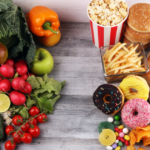
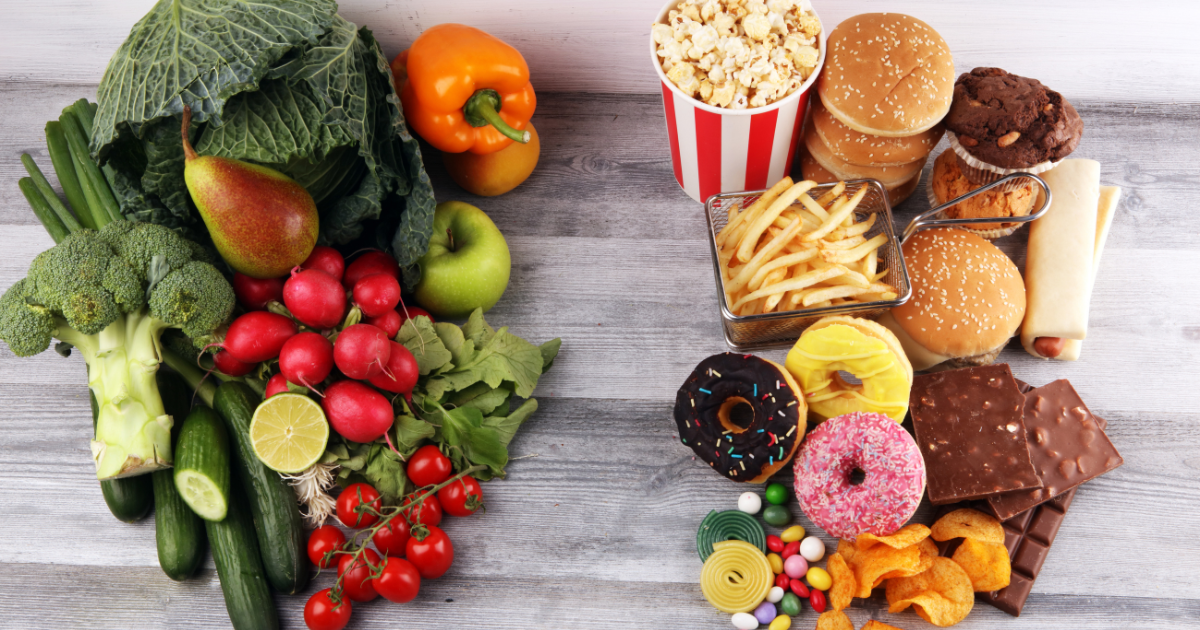
Pick up a bag of crisps. Open it. Before you eat a single one, notice the smell. That immediate, intense, almost aggressive rush of flavour — salt, fat, seasoning, something artificial that you cannot quite name but that your brain recognises immediately as desirable.
Now pick up an apple.
The apple smells like nothing by comparison. It is quiet. Subtle. It asks something of you — you have to bite into it, chew it slowly, let the flavour develop. It does not announce itself. It simply is.
For a child who has grown up eating crisps, biscuits, flavoured snacks, sweetened drinks — that apple is genuinely boring. Not because the child is difficult or ungrateful. But because their palate has been trained to expect something much louder than an apple can ever be.
What the food industry has done to flavour
The food industry has spent decades amplifying sensation. More salt. More sugar. More fat. More spice. More sourness. More of everything — layered and calibrated by food scientists specifically to hit the points in the brain that say more, again, now.
Snack foods are the most obvious example. But it goes further than crisps and sweets. Seasonings, sauces, flavoured yoghurts, cereals, drinks, baby snacks — all of it has been engineered to deliver a hit of flavour that real food simply cannot compete with.
And then there are the sweeteners.
When manufacturers want to reduce sugar they often reach for artificial alternatives — aspartame, sucralose, acesulfame K. These are marketed as the safer option.
The reality is more nuanced. In 2023, the International Agency for Research on Cancer (IARC) classified aspartame as possibly carcinogenic to humans (Group 2B), while the Joint FAO/WHO Expert Committee on Food Additives (JECFA) concluded that current acceptable daily intake levels do not need to change. These are not opposing conclusions; one assesses whether something has the potential to cause harm, the other evaluates risk at typical levels of consumption, and research has consistently linked artificial sweeteners to disruption of gut bacteria — the very microbiome we now understand to be foundational to immune function, brain health, and emotional regulation.
They also leave something behind. That cloying, slightly chemical sweetness that coats the mouth and does not quite go away. That makes you reach for another drink because the thirst never resolves. Because artificial sweetness does not satisfy the body the way real sweetness does. It mimics the signal without delivering what the signal promised.
The body knows the difference. It just cannot explain it.
As a parent, though, I find myself thinking about something much simpler. We are not raising an “average population”. We are raising individual children. Children with smaller bodies. Children whose brains and nervous systems are still developing. Children who may have autism, ADHD, epilepsy, food sensitivities, or no diagnosed condition at all. Every child is biologically unique.
Perhaps that is reason enough to be thoughtful about how often highly processed products — whether sweetened with sugar or artificial sweeteners — become part of everyday life. Not because fear is helpful. But because childhood is too important to fill with ingredients whose long-term effects are still being actively studied.
What we have done to our children’s palates
Here is what happens when a child grows up surrounded by intensely flavoured, highly processed food from the very beginning.
Their palate calibrates to that level of stimulation. It becomes the baseline. The normal. The expectation.
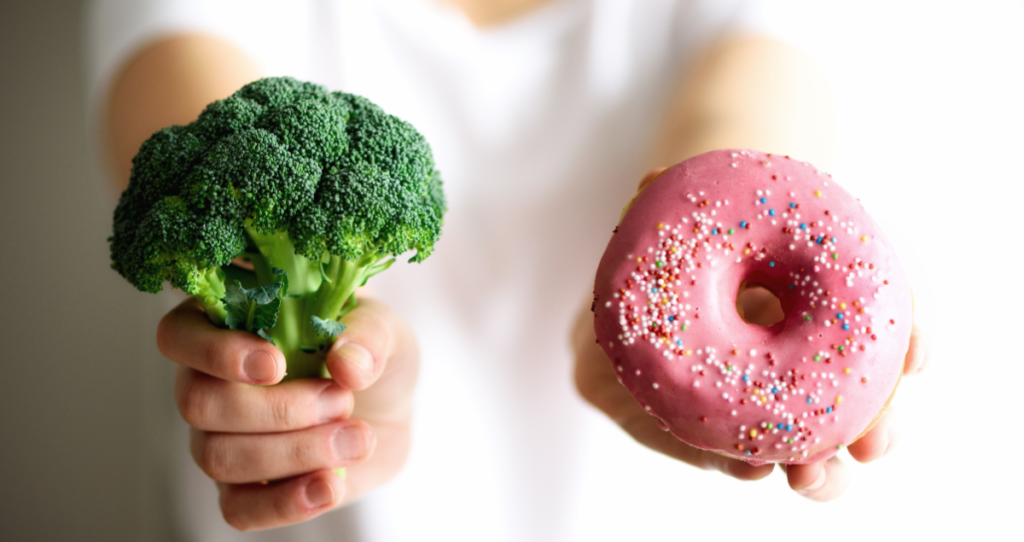
And real food — fruit, vegetables, a piece of good cheese, a bowl of plain porridge, a glass of water — falls short of that baseline every single time. Not because real food is lacking. But because the child’s nervous system has been trained to expect something it can never deliver.
We are essentially teaching children to be uninterested in real food. Not intentionally. But consistently. Every time we hand a child a brightly coloured snack engineered in a laboratory to be as compelling as possible, we are widening the gap between what they expect food to taste like and what real food actually is.
And then we wonder why they will not eat their vegetables.
Fresh food grown for durability — not for flavour
There is another layer to this that I think about often.
Fruit and vegetables used to be grown for flavour. Eaten at the right moment — when they were ripe, in season, close to where they grew. A tomato picked in August from a garden in the sun tastes like something completely different from a tomato picked green in January, gassed to ripen in a warehouse, and transported across three countries to reach a shelf.
Now almost everything is grown for durability. It needs to travel, it needs to survive warehouses, distribution centres and supermarket shelves. It needs to look identical, be perfect colour, perfect size, perfect shape.The result is often food that looks beautiful but tastes surprisingly ordinary. A tomato picked green and artificially ripened thousands of miles away cannot compete with one warmed by the summer sun and eaten a few hours after it was harvested.
And here we have today perfectly looking but practically tasteless fruits and vegetables, with the ability to last twelve days after it was harvested.
So today’s children face two challenges at the same time, they are simultaneously being overstimulated by processed food and understimullated by the real food that is supposed to be the alternative. The apple that should taste extraordinary has been grown for uniformity rather than flavour. And the crisp has been engineered to be irresistible.
It is not a fair competition.
What a baby’s first taste actually feels like
I want to say something here that I find genuinely fascinating.
When you give a baby their very first solid food — a piece of apple, a spoonful of pureed sweet potato, a taste of banana — that baby’s mouth is experiencing something completely new. Every flavour is overwhelming in the most extraordinary way. The sweetness of a ripe pear. The earthiness of a carrot. The sharpness of a tiny piece of orange.
A baby tastes with their whole body. They drool. They pull faces. They look startled. They reach for more, or they turn away with complete conviction. Nothing is subtle to a brand new palate. Everything is enormous.
That is real flavour meeting a nervous system that has not yet been trained to expect anything in particular.
It is one of the most beautiful things to watch.
And it is a window that closes. Gradually, quietly, with every intensely flavoured snack and sweetened drink that becomes part of a child’s daily experience. The sensitivity diminishes. The baseline shifts upward. Real food begins to feel like not enough.
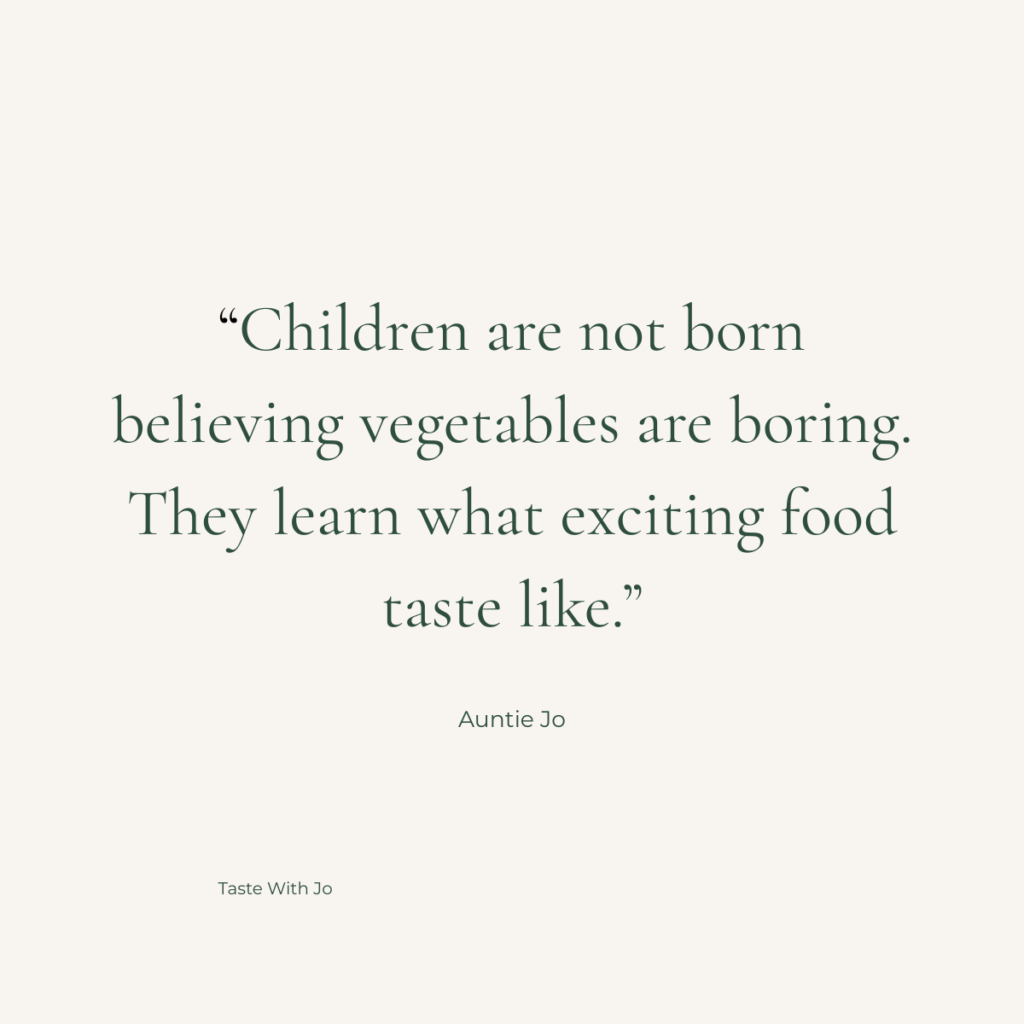
But children are not born believing vegetables are boring.
They learn what exciting food feels like.
We Don’t Raise Picky Eaters Overnight
This is why I find the phrase picky eater so uncomfortable.
Not because picky eating doesn’t exist. It absolutely does. Many children experience genuine feeding difficulties, sensory sensitivities or medical conditions that make eating incredibly challenging. Children with autism spectrum disorder, ARFID, oral-motor difficulties or other developmental conditions often need specialised support, patience and understanding—not judgement. But for many otherwise healthy children, what we call picky eating may simply be a palate that has been gradually trained to expect intense stimulation.
This isn’t about blame.
Parents are doing their best in a food environment that has changed dramatically within just a few generations. Bright packaging, cartoon characters, children’s yoghurts sweeter than desserts, fruit drinks with very little fruit, snack foods available everywhere. Children are surrounded by products that have been carefully designed to capture their attention long before they understand nutrition.
Parents are not competing with another family recipe. They are competing with teams of food scientists, psychologists, marketers and product developers whose entire job is to make processed food irresistible.
That is an incredibly difficult battle to fight, and yet, despite all of this, there is still something wonderfully hopeful.
We train the taste
This is the part I want parents to really sit with.
We train our children’s taste. From the very beginning. Every food choice we make consistently — every snack we offer habitually, every drink we pour as the default, every flavour we make familiar — is teaching a child’s palate what food is supposed to taste like.
A child who grows up drinking water and eating fruit reaches for water and fruit naturally. Not because they have better willpower or more nutritional virtue. But because water and fruit are what their palate learned to expect.
A child who grows up drinking sweetened drinks and eating flavoured snacks every day reaches for those things naturally. For the same reason. The palate was trained.
We have more influence over this than we realise. And more responsibility.
The way back — and it is gentler than you think
The good news is that palates adapt. In both directions.
When the level of stimulation in a child’s diet reduces — gradually, without drama, without turning food into a battleground — the palate slowly recalibrates receptor cells regenerate approximately every 10-14 days, this means taste buds are constantly adjusting. However taste preference takes around 2 – 8 weeks of consistent exposure. It takes time. It takes consistency. It takes not replacing one intense flavour with another, and children can rediscover flavours they once rejected. What feels bland today may become tomorrow favourite food.
But it happens.
The goal is not perfect eating. It is not eliminating every processed food and never allowing a sweet thing again. It is simply — gradually, over time — bringing the baseline back down toward real food. So that real food has a chance.
So that an apple can taste like an apple again.
Real food does not need to shout. It does not need additives, enhancers, or laboratory-calibrated seasoning to be extraordinary. A ripe strawberry in June. A bowl of slow-cooked broth on a cold day. Bread still warm from the oven. Garlic softening in butter.
These things have all the flavour in the world.
We just have to quieten everything else enough to hear it.
— Jo
References
- World Health Organization. Aspartame hazard and risk assessment results released. https://www.who.int/news/item/14-07-2023-aspartame-hazard-and-risk-assessment-results-released
- World Health Organization. WHO Guideline: Use of Non-Sugar Sweeteners. https://www.who.int/publications/i/item/9789240073616
- World Health Organization. Health effects of the use of non-sugar sweeteners: systematic review and meta-analysis. https://www.who.int/publications/i/item/9789240046429