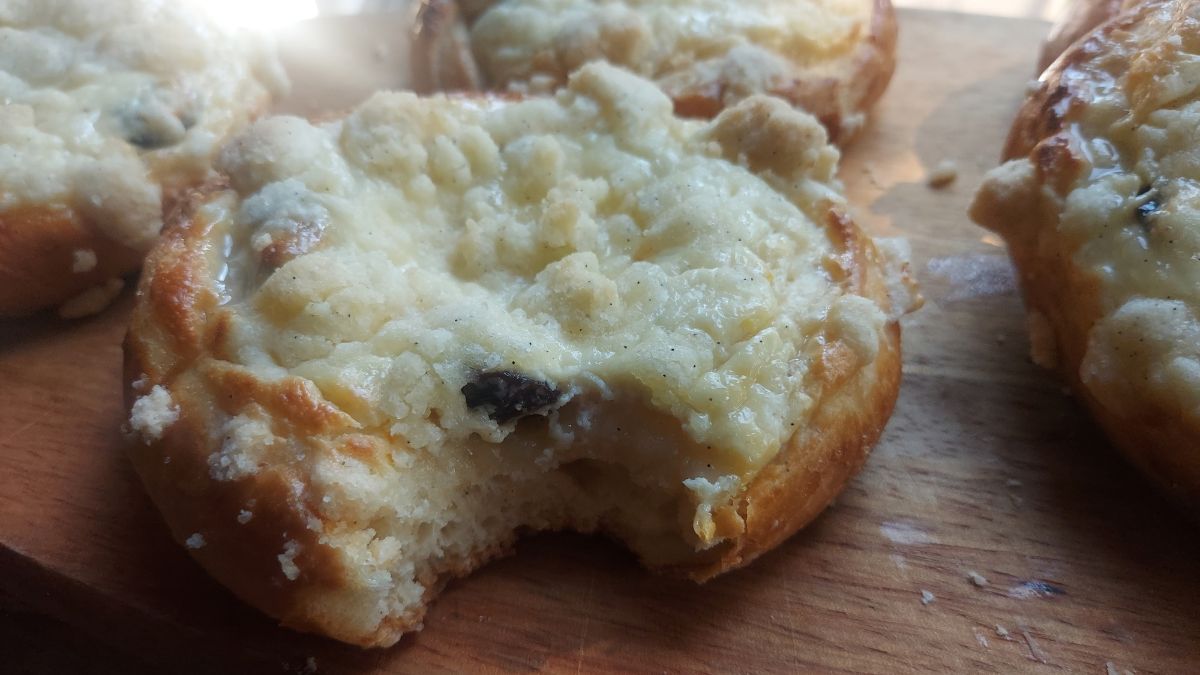
A Taste I Grew Up With
I have known drożdżówki z serem for as long as I can remember. Growing up in Poland, they were simply part of everyday life. You could find sweet yeast buns in almost every bakery, filled with cheese, fruit, poppy seeds or custard, usually with plenty of crumble on top.
My mum would sometimes make them at home, but she also used to buy me cheese drożdżówki to take to school for breakfast. I still remember that combination of soft yeast dough and sweet Polish twaróg. It is one of those flavours that instantly takes me back to childhood.
And I don’t think I ever grew out of loving them. My family loves them, my friends love them, and whenever I make a tray, they never seem to last very long.
My Own Version of Polish Cheese Buns
Over the years, I wanted to create my own version. Not to completely change the traditional drożdżówka, because the cheese filling and crumble are exactly what I love about it, but to make the dough even softer and richer.
For this recipe, I use tangzhong, a simple cooked mixture of flour and water that helps the dough hold on to more moisture. I also add condensed milk, egg yolks and plenty of butter. The result is an incredibly soft, fluffy dough with a slightly richer, almost brioche-like feel, while still tasting like the drożdżówki I know.
The yolks were particularly important to me. I wanted that beautiful, tender yellow dough I remember from rich homemade yeast baking, rather than a plain sweet bread dough.
Twaróg, Orange and Plenty of Crumble
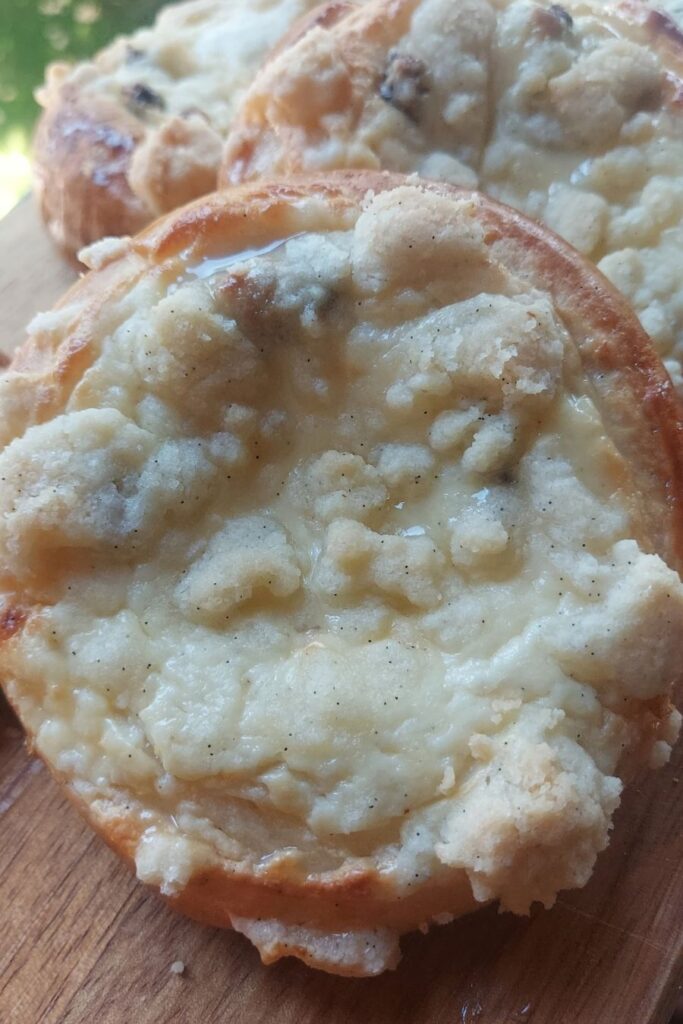
The centre is filled with Polish twaróg, lightly sweetened and flavoured with vanilla. I added fresh orange zest because I love what it does to the cheese filling. It doesn’t turn these into orange buns. It just gives the twaróg a fresh, fragrant note that works beautifully with the vanilla and buttery dough.
If you’re using the zest, I recommend choosing an organic or unwaxed orange when possible and washing it thoroughly before grating. You only want the finely grated orange part of the peel, without the bitter white pith underneath.
And then there is the crumble. I like a proper grudkowa kruszonka, with irregular buttery chunks rather than a fine sandy topping. I keep it cold until the buns are ready for the oven so some of those lovely larger pieces stay intact while baking.
Once the drożdżówki have cooled slightly, I finish them with a simple orange glaze. Just enough to add another little hit of citrus without covering the flavour of the cheese.
Soft, Buttery and Best Eaten Fresh
These are the kind of drożdżówki I wanted to make at home: soft enough that you can pull the dough apart with your fingers, with a generous centre of sweet twaróg, buttery crumble on top and that little bit of orange running through the whole thing.
They are my own version, but every time I eat one, they still remind me of the drożdżówki I grew up with in Poland. And perhaps that’s my favourite thing about recipes like this. You can change them, make them your own and pass them on to your family, while the taste can still take you straight back to where it started.
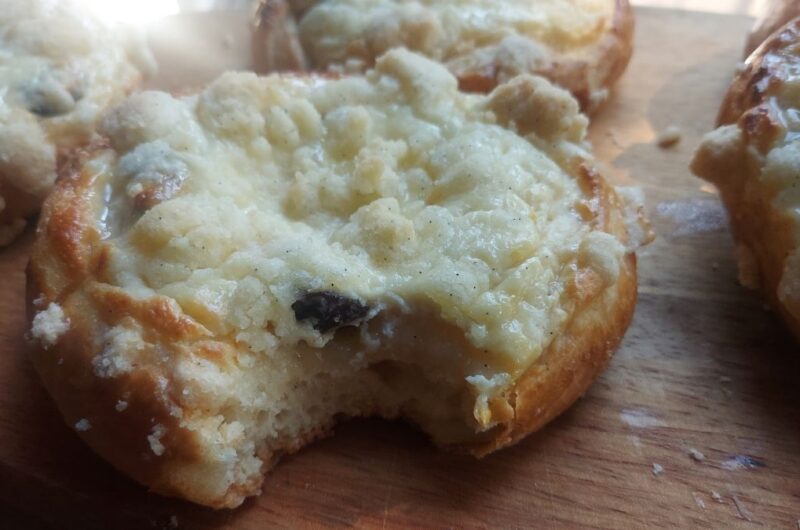
Polish Cheese Buns – Drożdżówki z Serem, Orange & Crumble
Difficulty: Medium10/12
servings30
minutes22
minutes380
kcalIngredients
tangzhong buns20 g all-purpose flour
75 g water
For the Dough
340 g all-purpose flour
All of the tangzhong
115 g whole milk, lukewarm
60 g sweetened condensed milk
2 egg yolks, at room temperature
40 g sugar
5 g instant dry yeast or 15 g fresh yeast
4–5 g salt
70 g very soft butter
1 tsp vanilla extract or vanilla paste, optional
For the Orange Cheese Filling
500 g full-fat or semi-fat Polish twaróg
60–70 g sugar
1 egg
1 egg yolk
1 tsp vanilla extract or paste
Finely grated zest of ½–1 orange
10–15 g potato starch, only if the twaróg is quite moist
For the Crumble
60 g all-purpose flour
40 g cold butter, cubed
35 g sugar
Pinch of salt
½ tsp vanilla extract or a little vanilla sugar
For the Egg Wash
1 egg yolk
1 tbsp milk
For the Orange Glaze
For the Orange Glaze
Approx. 1–1½ tbsp fresh orange juice
Directions
- Make the tangzhong. In a small saucepan, whisk together the flour and water until smooth. Cook over low heat, stirring constantly, until the mixture thickens into a paste similar to thick custard. Remove from the heat and leave to cool to room temperature.
- Make the dough. Add the flour, cooled tangzhong, sugar, yeast, lukewarm milk, condensed milk, egg yolks and vanilla to the bowl of a stand mixer. If using fresh yeast, you can first dissolve it in a little of the lukewarm milk with a pinch of sugar.
- Knead with the dough hook for about 5 minutes, until everything comes together. Add the salt, then gradually add the very soft butter, a little at a time, allowing each addition to incorporate before adding more.
- Continue kneading for another 8–12 minutes. The dough should become very soft, smooth and elastic. It may still feel slightly sticky, but it should stretch into a thin, almost transparent membrane. Don’t add extra flour just because the dough feels sticky at first.
- First rise. Shape the dough into a ball and place it in a lightly greased bowl. Cover and leave in a warm place for 1–1½ hours, or until roughly doubled in size.
- Make the crumble. Mix the flour, sugar, salt and vanilla. Add the cold cubed butter and rub and squeeze everything together with your fingertips until irregular clumps form. Don’t work it into fine crumbs. Chill for at least 20–30 minutes.
- Make the cheese filling. Mash or briefly process the twaróg. It doesn’t need to be completely smooth. Mix in the sugar, egg, egg yolk, vanilla and finely grated orange zest. If the filling is firm, don’t add any starch. If your twaróg is quite moist and the mixture feels loose, mix in 10–15 g potato starch.
- Shape the buns. Gently deflate the risen dough and divide into 10–12 equal pieces. Shape each piece into a smooth ball and arrange on baking trays lined with baking paper, leaving plenty of space between them. Flatten each one slightly.
- Cover and leave to rise again for 25–40 minutes. Using the bottom of a glass or your fingers, make a fairly wide, deep indentation in the centre of each bun, leaving a fluffy border around the outside. Fill generously with the cheese mixture.
- Cover and leave to rise again for 25–40 minutes. Using the bottom of a glass or your fingers, make a fairly wide, deep indentation in the centre of each bun, leaving a fluffy border around the outside. Fill generously with the cheese mixture.
- Bake at 175°C conventional / top and bottom heat for approximately 17–22 minutes, depending on the size. The buns should be lightly golden rather than deeply browned. Avoid overbaking them, as this helps keep the dough beautifully soft.
- Transfer the baked drożdżówki to a wire rack and allow them to cool.
- Make the orange glaze. Gradually stir the fresh orange juice into the icing sugar until you have a thick glaze that slowly falls from a spoon.
- Drizzle the glaze in thin lines over the cooled or just slightly warm buns. Allow it to set slightly before serving.
Notes
- Don’t add extra flour if the dough feels sticky at first. It becomes smoother and more elastic as it kneads.
For the softest texture, knead until the dough passes the windowpane test.
Use full-fat or semi-fat Polish twaróg if possible. If the cheese filling is already thick, there is no need to add potato starch.
For the orange zest, use an organic or unwaxed orange when possible and wash it thoroughly before zesting. Grate only the orange part of the peel, avoiding the bitter white pith.
Keep the crumble cold until you are ready to bake. This helps those larger buttery clumps keep their texture.
Make 10 buns for larger bakery-style drożdżówki or 12 for medium-sized ones.
Don’t overbake. They should be lightly golden, not dark brown, so the dough stays beautifully soft.
Add the orange glaze when the buns are cool or only slightly warm, otherwise it will melt and disappear into the topping.
These drożdżówki are at their best fresh, but keep them covered once completely cool so the dough stays soft.