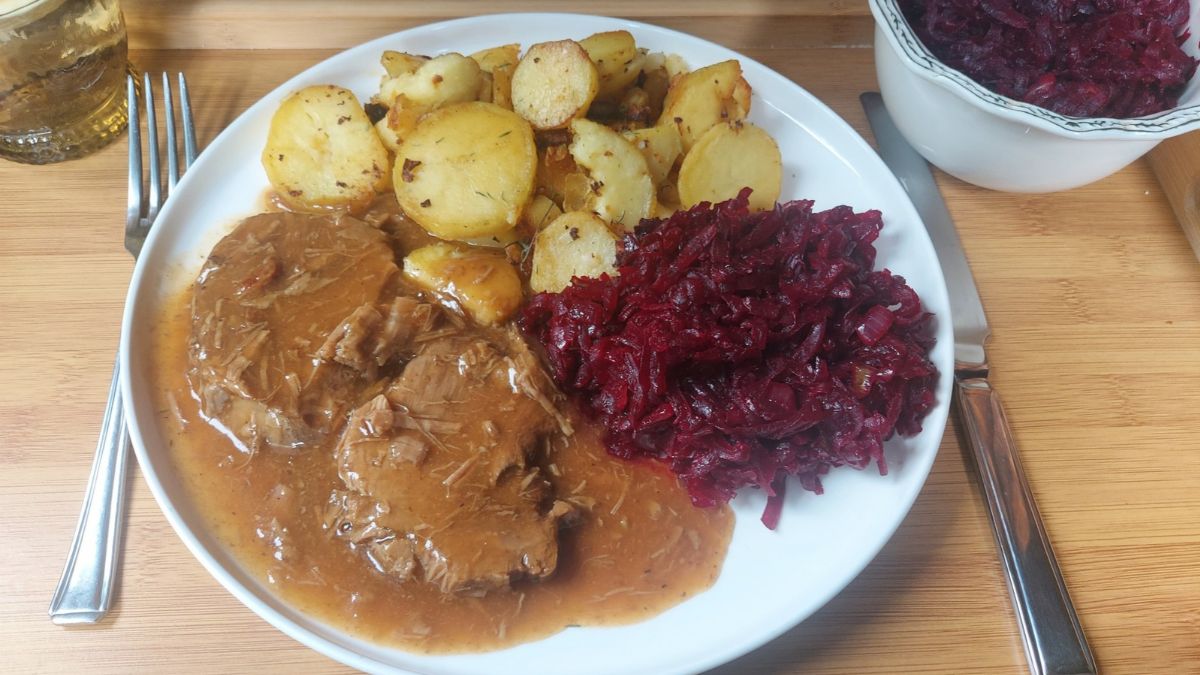
There are some meals that don’t need much introduction, especially when you’ve grown up eating them. A tender piece of beef, a generous spoonful of homemade gravy, soft Silesian dumplings or potatoes, and a side of warm, sweet-and-savoury beetroot. It’s the kind of dinner that makes you want to sit at the table a little longer, even when everyone has finished eating.
For me, this is proper home cooking. Nothing particularly fancy, no complicated ingredients, just good food given enough time to develop its flavour. And while the beef is the centre of the meal, I have to say that the gravy and beetroot are just as important. Without them, something would definitely be missing.
Slow-Roasted Beef Shoulder: A Little Patience Goes a Long Way
Beef shoulder is one of those cuts that really rewards patience. It isn’t naturally as tender as some of the more expensive cuts, but that’s exactly why I like cooking it slowly. With enough time, moisture and gentle heat, the connective tissue gradually softens, and the meat becomes beautifully tender. Meanwhile, the cooking liquid develops into a rich, savoury base for homemade gravy.
I usually prepare a simple marinade with onion, garlic, olive oil, balsamic vinegar, honey, salt, black pepper and water. I blend everything together until smooth, then make small cuts in the meat with a knife before pouring the marinade over it. If I have time, I leave the beef to marinate overnight. If I don’t, I simply put it straight into the oven, and it still makes a lovely dinner.
The honey brings a little sweetness, while the balsamic vinegar adds acidity and depth. The onion and garlic give the cooking liquid a wonderful savoury base, and as everything cooks together, those flavours become part of the gravy. I don’t need a long list of spices here because the ingredients already work so well together.
Why I Prefer a Cast-Iron Pot
My favourite way to make slow-roasted beef shoulder is in a cast-iron pot with a lid. It holds heat beautifully and keeps the meat surrounded by moisture while it cooks. A covered ovenproof dish works too, but I find my cast-iron pot especially convenient for this kind of meal.
I add enough water to reach roughly halfway up the meat, then leave it to cook slowly. From time to time, I check the liquid, add a little more if needed and turn the beef over. The part sitting above the liquid can dry out more quickly, so turning it helps keep everything moist and evenly cooked.
The wonderful thing about beef shoulder is how versatile it becomes once it’s tender. You can slice it and serve it with gravy, or cook it until it practically falls apart and pull it into pieces with two forks. That makes it useful for more than one meal, although the traditional dinner with gravy is always a favourite of mine.
Why Homemade Gravy Makes All the Difference
For me, homemade gravy is just as important as the roast itself. After several hours of slow cooking, the liquid in the pot is full of flavour from the beef, onion, garlic, honey and balsamic vinegar. Those rich cooking juices are the foundation of a proper gravy, and I honestly can’t imagine replacing them with something from a packet.
I’ve never been particularly fond of instant gravy granules. To me, they have a distinctive, almost industrial taste that can overpower the natural flavour of a good roast. And when you look at the ingredients, things become even more interesting. Some popular beef gravy granules don’t actually list any beef or beef stock at all. Instead, they rely on starches, fats, flavourings and other ingredients to recreate that familiar savoury taste.
It made me wonder how something can taste like beef without containing any beef. And if that’s possible, could a beef-flavoured gravy even be suitable for vegans? I decided to take a closer look at the ingredients behind these products, including some popular Tesco gravy granules. If you’re curious about what really goes into them, you can read my article What’s Really in Beef Gravy Granules?
Personally, I prefer to let the real ingredients do the work. Once the beef is tender, I thicken the cooking juices with a little potato starch or cornflour mixed with cold water, then add a splash of cream to soften and balance the flavours. A final taste, perhaps a little salt and black pepper, and the gravy is ready.
If you’ve ever wondered how starch, fat, salt and flavourings can create something that tastes like beef gravy, take a look at my article, How Do Starch, Fat, Salt and Flavourings Become Beef Gravy?.
There’s something satisfying about making a sauce from the very ingredients you’ve been cooking. No need to imitate the flavour of roasted beef when you have the real thing right there in your pot. And with soft Silesian dumplings or potatoes to soak it all up, I can’t think of a better way to enjoy it.
Polish Beetroot: The Side Dish That Deserves More Attention
Now, let’s talk about the beetroot, because this is where the meal becomes particularly Polish.
In Poland, warm grated beetroot is a familiar addition to a traditional dinner. It’s especially good with roasted or braised meat, potatoes, dumplings and plenty of gravy. The combination of sweet beetroot, savoury onion and a little acidity might sound unusual if you didn’t grow up eating it, but it works beautifully.
I’ve served beetroot alongside dinner to people who weren’t used to seeing it on their plates. Some were genuinely surprised by the idea. But once they tried it with the meat and gravy, the combination suddenly made sense, and the plates were soon empty.
How I Make My Warm Polish Beets
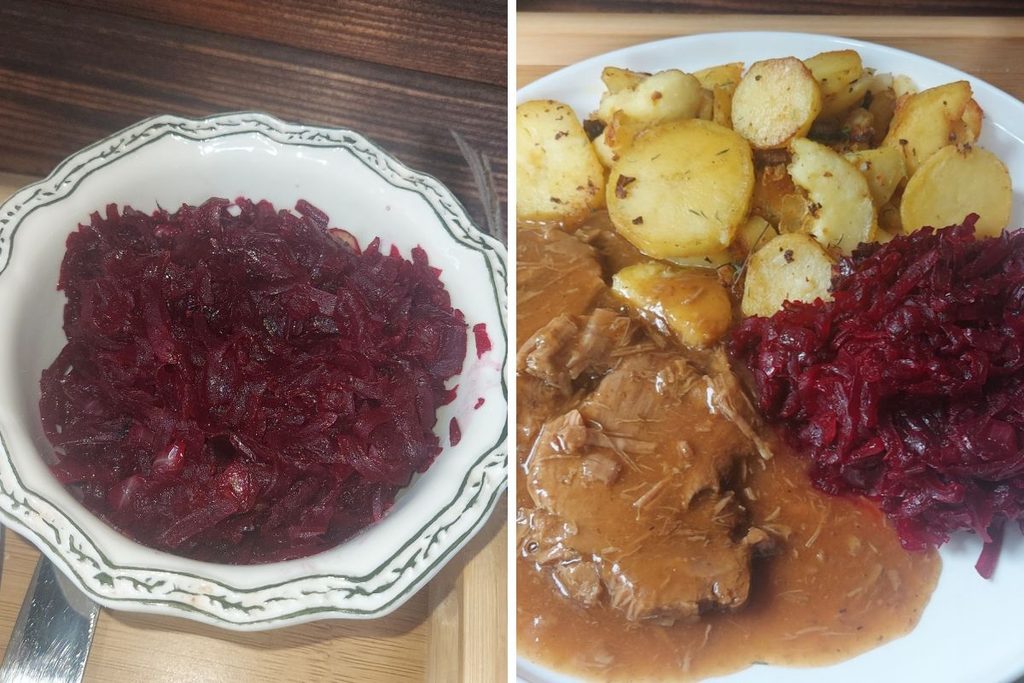
I usually start with a packet of ready-cooked beetroot, which makes this side dish wonderfully simple. I finely dice an onion, although not so finely that it disappears completely, and gently fry it in extra virgin olive oil until it’s soft, translucent and nicely cooked. Then I add the beetroot, grated on the coarse side of a box grater, and warm everything together.
Because the beetroot is already cooked, there’s no need to fry it for long. I season it with salt and black pepper, then add lemon juice a little at a time until the flavours are balanced. What I’m looking for is a pleasant sweetness with a savoury edge and just enough lemon to lift the flavour.
The beetroot shouldn’t taste sour. That’s important to me. Some people prefer to use vinegar, and that’s absolutely fine if you enjoy a sharper flavour, but I personally prefer lemon. It gives the beetroot the freshness I’m looking for without overpowering its natural sweetness.
A Little Story About Vinegar and British Food
Living in the UK for so many years, I noticed something interesting about the way different countries enjoy pickled foods. In Poland, I was used to pickled beetroot and gherkins that had a noticeable balance of sweetness and acidity. In Britain, I often found the supermarket versions much sharper and more vinegary.
I noticed it particularly with pickled beetroot and gherkins. That’s why I often bought German-style gherkins from Lidl, because their flavour reminded me much more of the ones I knew from Poland. Of course, everyone’s taste is different, but I definitely prefer a pickle that doesn’t make my whole face scrunch up after one bite.
And then there’s the British relationship with vinegar in general. Salt and vinegar crisps, vinegar poured over chips, and even pickled eggs! I’ve never tried a pickled egg, and I can’t say I’ve ever felt particularly tempted. It sometimes makes me wonder whether there’s anything the British haven’t thought of adding vinegar to.
Apparently, there are even drinks made with vinegar, so perhaps I shouldn’t be surprised. Still, when it comes to my Polish beetroot, I’ll happily stick with a squeeze of lemon.
What to Serve with Slow-Roasted Beef Shoulder
My favourite way to serve this meal is with kluski śląskie, traditional Polish Silesian potato dumplings. They’re soft, slightly chewy and have a little indentation in the middle that’s perfect for catching gravy. Add a generous helping of warm beetroot and you’ve got the kind of dinner that doesn’t need anything else.
But this slow-roasted beef shoulder is just as delicious with boiled potatoes, roasted potatoes or even homemade fries. The gravy goes with practically everything, so I don’t worry too much about choosing the perfect accompaniment. Sometimes the best choice is simply whatever you feel like eating that day.
It’s also a lovely meal to make when you have a little more time at home. Most of the work happens in the oven, and although I check the pot occasionally, there’s no need to stand over the stove for hours. The beef slowly becomes tender, the gravy develops its flavour, and the kitchen fills with that familiar smell of a proper home-cooked dinner.
A Traditional Dinner, Made My Way
I love recipes like this because they remind me that good food doesn’t have to be complicated. A few everyday ingredients, a little patience and the willingness to cook something from scratch can create a meal that’s genuinely satisfying. The beef is tender, the gravy is rich, and the warm Polish beetroot brings its own beautiful balance of sweetness and freshness.
And perhaps that’s what I enjoy most about this kind of cooking. It’s familiar and comforting, but there’s still room to make it your own. Serve it with Silesian dumplings for a traditional Polish dinner, or choose potatoes and whatever else you enjoy. Just don’t forget the gravy.
Always Selective, Never Restrictive.
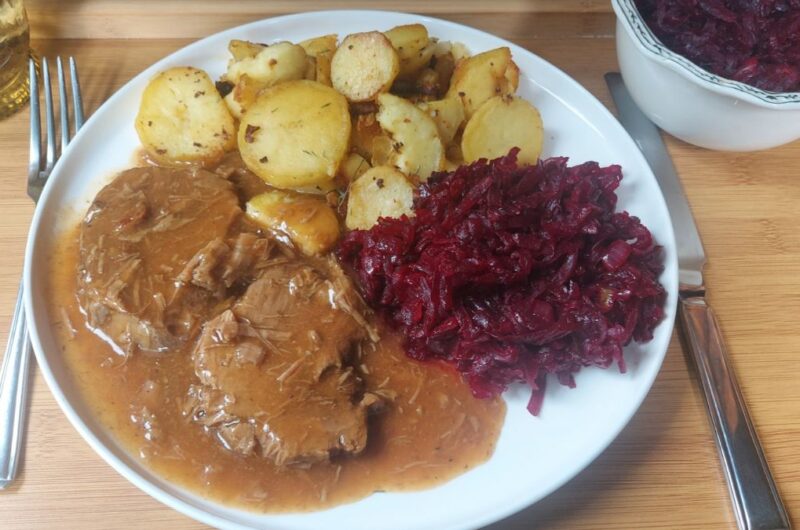
Slow-Roasted Beef Shoulder with Homemade Gravy and Polish Beets
Course: Main CourseCuisine: PolishDifficulty: Easy6
servings25
minutes4
hoursIngredients
- For the Slow-Roasted Beef Shoulder
1–2 kg beef shoulder (one whole piece or several smaller pieces)
- For the Marinade
1 medium onion
3 garlic cloves
1 level tsp salt
¼ tsp freshly ground black pepper
1 tbsp extra virgin olive oil
1 tbsp balsamic vinegar
1 generous tbsp honey
200 ml water
- For Roasting
Approximately 1 litre water, plus extra as needed to keep the liquid halfway up the meat
- For the Homemade Gravy
Cooking juices from the roasted beef
1½ tsp potato starch or cornflour (cornstarch)
A little cold water, to dissolve the starch
A splash of cream
Salt and black pepper, to taste
- For the Warm Polish Beetroot
1 packet cooked beetroot (approximately 500 g, assumed)
1 medium onion, finely diced
2–3 tbsp extra virgin olive oil
Approximately ½ level tsp salt, or to taste
Freshly ground black pepper, to taste
Fresh lemon juice, to taste
- Optional for serving
Silesian potato dumplings (kluski śląskie), boiled potatoes, roasted potatoes or homemade fries.
Directions
- Prepare the Marinade: Peel and roughly chop the onion and garlic. Place them in a blender with the salt, black pepper, extra virgin olive oil, balsamic vinegar, honey and 200 ml water. Blend until smooth.
- Marinate the Beef
Place the beef shoulder in a large ovenproof dish or cast-iron pot. Using a small, sharp knife, make several small, deep cuts across the meat. Pour the blended marinade over the beef, making sure it is well coated.
If you have time, cover and refrigerate overnight to allow the flavours to develop. Otherwise, you can cook the beef straight away. - Slow-Roast the Beef
Preheat the oven to 160°C (320°F), conventional setting.
Add enough water to the pot to reach approximately halfway up the meat. Depending on the size of your pot and the amount of beef, you may need around 1 litre, but use the liquid level as your guide.
Cover with a tight-fitting lid and place in the oven. Roast for approximately 3–4 hours, depending on the size and thickness of the beef, until beautifully tender. - Check the Meat During Cooking
Check the beef occasionally to make sure there is enough liquid in the pot. If the liquid level drops, add a little hot water to keep it around halfway up the meat.
Turn the beef over from time to time to prevent the exposed surface from drying out. Start checking for tenderness after approximately 2½ hours. The beef is ready when a fork slides in easily and the meat is tender enough to slice or pull apart. - Prepare the Homemade Gravy
Once the beef is cooked, carefully remove it from the pot and keep it covered while you finish the gravy.
In a small bowl, mix 1½ tsp potato starch or cornflour (cornstarch) with a little cold water until completely smooth and pourable.
Bring the cooking juices to a gentle simmer. Gradually stir in the starch mixture and cook briefly until the gravy thickens. Add a splash of cream, stir well and season with salt and black pepper if needed. If the gravy is too thick, add a little water until you reach your preferred consistency. - Prepare the Warm Polish Beetroot
While the beef is roasting, finely dice the onion and grate the cooked beetroot using the coarse side of a box grater.
Heat 2–3 tbsp extra virgin olive oil in a frying pan over medium heat. Add the onion and cook gently until softened, translucent and lightly golden.
Add the grated beetroot and stir well. Cook for a few minutes, just until heated through, as the beetroot is already cooked.
Season with approximately ½ level tsp salt, black pepper and a little freshly squeezed lemon juice. Taste and adjust gradually. The beetroot should be pleasantly sweet and savoury, with just enough lemon to balance its natural sweetness without making it sour. - Serve
Slice the slow-roasted beef shoulder or gently pull it apart with two forks if it is very tender. Serve with a generous spoonful of homemade gravy and warm Polish beetroot.
Pair with traditional Polish Silesian dumplings (kluski śląskie), boiled potatoes, roasted potatoes or homemade fries. Make sure to serve plenty of gravy alongside, because it goes beautifully with every one of them.
Notes
- Beef cut: Beef shoulder is ideal for slow roasting because its connective tissue gradually softens during cooking, making the meat tender and juicy. You can use 1–2 kg, either as one piece or several smaller pieces.
Cooking time: The cooking time depends on the size, thickness and cut of beef. Start checking for tenderness after 2½ hours. For pulled beef, continue cooking until the meat separates easily with two forks.
Marinating: For a deeper flavour, marinate the beef overnight in the refrigerator. If you’re short on time, you can roast it immediately after adding the marinade.
Cooking liquid: Keep the liquid approximately halfway up the meat, adding more hot water when necessary. Avoid adding too much at once, as this can dilute the gravy.
Cast-iron pot: A heavy cast-iron pot with a tight-fitting lid works particularly well, but any deep, ovenproof dish with a suitable lid will do.
Gravy consistency: Always mix potato starch or cornflour with cold water before adding it to the hot cooking juices. Start with 1½ teaspoons and add more only if needed. The gravy should be smooth and rich, but still pourable.
Polish beetroot: Ready-cooked beetroot saves time. Add lemon juice gradually to balance the natural sweetness without making the beetroot sour. If you prefer a sharper flavour, you can use a little vinegar instead.
Serving suggestions: Traditional Polish Silesian dumplings (kluski śląskie) are especially good for soaking up the gravy, but boiled potatoes, roasted potatoes and homemade fries work beautifully too.
Storage: Refrigerate leftovers in airtight containers within 2 hours of cooking and use within 3–4 days. Reheat thoroughly until piping hot. Freeze portions of beef with gravy for up to 3 months for best quality.