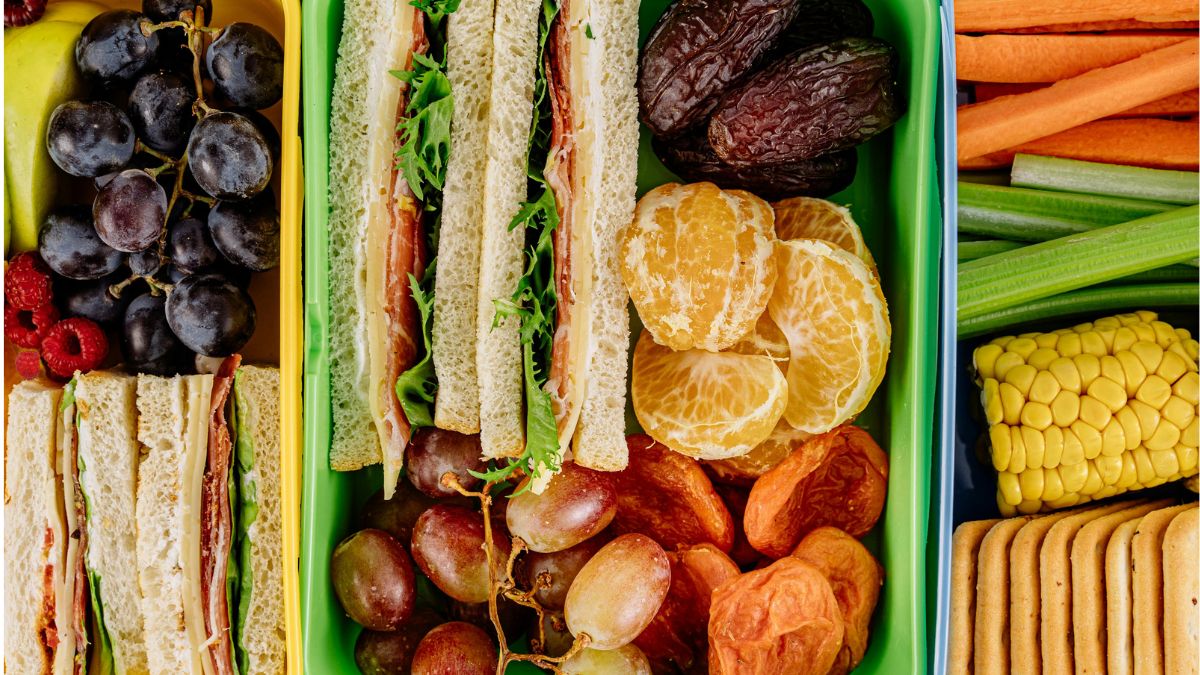
September comes around and suddenly lunchboxes become part of the daily routine again. Search for school lunch ideas for kids and there is certainly no shortage of inspiration online: perfectly shaped sandwiches, colourful fruit, neatly arranged vegetables, yoghurt and little snacks divided between compartments. They look wonderful, but after years of working around children and food, there is one question I think matters much more than how good a lunchbox looks when you close the lid in the morning: will your child actually eat what is inside it?
I’m a parent, but I’ve also worked with children and food in both school and nursery settings. I’ve watched a lot of children eat, and I’ve also watched plenty of children decide very firmly that they weren’t going to eat something. What parents carefully put into a lunchbox in the morning and what actually gets eaten at lunchtime can be two very different things.
Putting cucumber into a lunchbox doesn’t mean the cucumber has been eaten. I’ve seen enough cucumber flying across a school lunch hall to know that.
This is why I don’t want to give you another list of twenty things to put into a “healthy lunchbox”. Most parents already know that children need nutritious food. The more useful question is how we give them good choices they are realistically willing to eat, while gradually teaching them how to make those choices for themselves.
The Parent Creates the Framework, but the Child Participates in the Choice
There is a big difference between asking a child, “What do you want in your lunchbox?” and giving them several sensible options from which they can build their own lunch. The first approach can result in some very creative requests; the second gives the child autonomy within boundaries you have already created.
The parent creates the framework, but the child participates in the choice. You decide which foods are available and appropriate, and your child chooses from those options. Instead of always presenting a completely finished lunchbox, bring your child into the kitchen and let them help put it together. As they become older and more capable, they can gradually take on more of the preparation themselves.
The NHS also encourages involving children in choosing and preparing their lunchboxes, noting that children may be more likely to eat food they have helped prepare. But there is a bigger lesson here too. Eventually, our children need to be able to open the fridge and make reasonable choices without us standing beside them. Learning how to feed themselves can begin much earlier than we sometimes think.
Teach Children What Food Does, Not Simply That It Is “Healthy”
I don’t particularly like telling children, “Eat it because it’s healthy.” Healthy is quite an abstract concept when you’re five. Children don’t need a lesson in nutrition terminology, but they can understand that food has a purpose and that different foods do different jobs in their bodies.
We can explain it in language that actually means something to them. Protein helps their body grow and repair itself. Calcium helps build strong bones and teeth. Carbohydrates give them energy to think, run and play. Fibre is the part of plant foods our bodies don’t completely digest, and we find it in foods such as fruit, vegetables, beans, oats and wholegrain foods.
For a small child, the explanation can be much simpler: “Fibre helps you poo.”
Perhaps we should talk about poo more. There is nothing embarrassing about it. We teach children why they brush their teeth and wash their hands, so why shouldn’t they understand what helps them go to the toilet? They don’t need to know what a microbiome is; they can understand that fibre and enough water help keep their poo moving and make it easier to go.
These don’t need to become lectures over lunch. They are simply little conversations that happen naturally over time: “That has protein your growing body needs,” “This gives you energy for school,” or “That has fibre, which helps you poo.” We aren’t trying to turn a six-year-old into a nutritionist. We’re helping them understand why their body needs different kinds of food.
Give the Lunchbox Some Healthy Competition
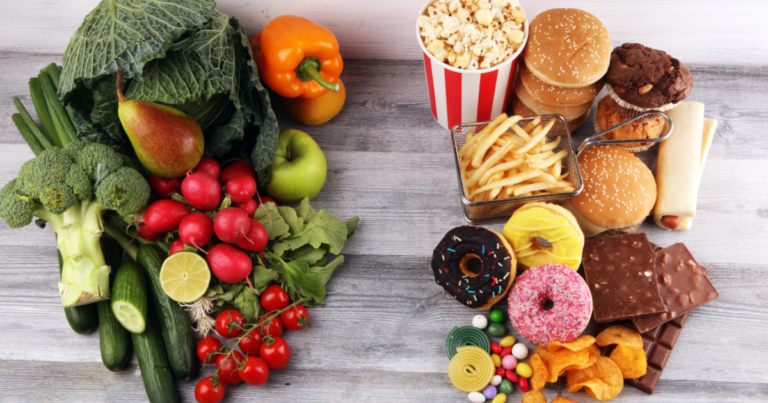
One thing parents can easily overlook is what the foods inside a lunchbox are competing against. If you pack one or two foods you desperately want your child to eat alongside several things you already know they find much more exciting, it shouldn’t be particularly surprising when the favourites disappear and everything else comes home.
I think of this as healthy competition. Build the lunchbox from several options you are reasonably happy for your child to choose. Include familiar foods, give them variety and continue offering small amounts of foods they are still learning to accept. The aim isn’t to make every mouthful nutritionally perfect; it’s to create a situation in which you are reasonably comfortable with the choices available to them.
Research into school lunchboxes shows why this matters. Vegetables are consistently among the foods children are most likely to leave uneaten. That isn’t a reason to stop offering them. It is simply a reminder that putting nutritious food into a lunchbox and a child actually eating it are two different things.
What Working in a School Kitchen Taught Me
When I worked in a school kitchen, I noticed an interesting difference between children having school dinners and those bringing packed lunches. Children eating school meals would usually find something they were prepared to eat, even when they didn’t particularly like the main meal. They had choices, and there was also a buffet where they could choose things such as chopped carrot, cucumber, sweetcorn or cheese.
Where I worked, children who really didn’t want the meal that day could sometimes choose a sandwich instead. That was useful, but some children quickly worked out that the familiar, predictable sandwich was available and started asking for one every day. If the cook or person serving remembered that this was becoming a habit, they would encourage the child to go back and choose something from the lunch options instead. They weren’t forcing the child to eat; they were trying to prevent one familiar option from becoming the only option the child would consider.
Packed lunches were different. I regularly saw boxes containing fromage frais or yoghurt, crisps, crackers, cheese and ham, perhaps some chopped cucumber or carrot and a piece of fruit. From a parent’s perspective, the lunchbox might have looked perfectly reasonable when it left the house that morning. The parent, however, wasn’t sitting in the lunch hall watching what happened next.
I’ve watched children discreetly try to drop vegetables under the table so a teacher wouldn’t notice, and yes, I’ve watched cucumber fly across the lunch hall. Food can also be discarded or swapped, so an empty lunchbox doesn’t always tell you exactly what your child ate.
School Lunch Ideas for Kids: Try the Lunchbox at Home
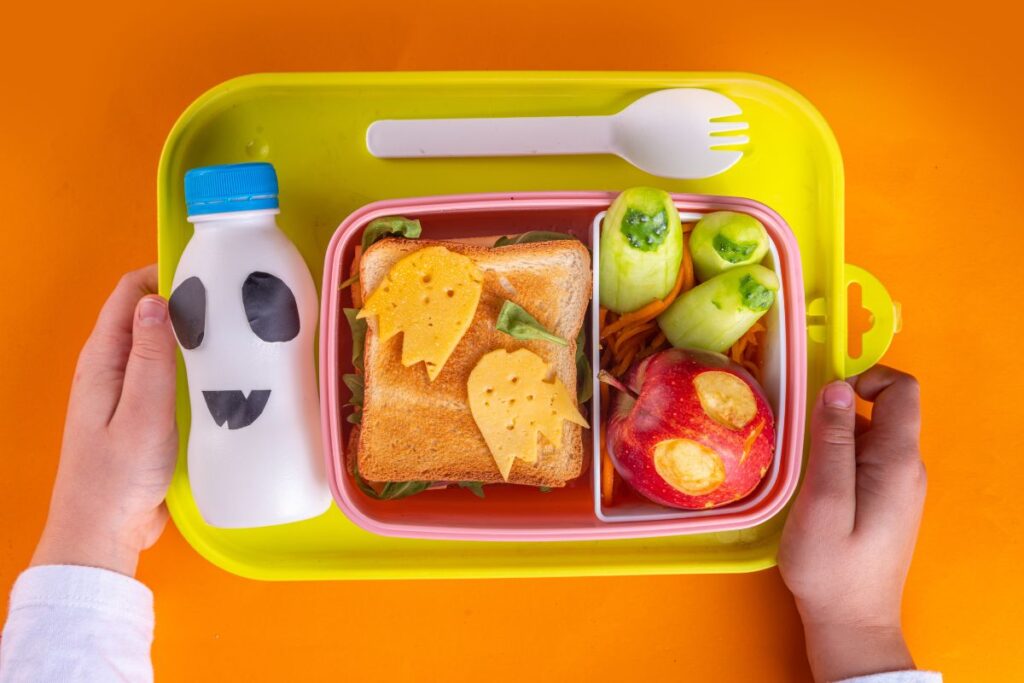
If your child is starting school, try two or three practice lunches before the first day. Let your child help choose from the options you’ve provided, pack everything into their actual school lunchbox and give it to them at lunchtime at home.
Then simply observe. What do they reach for first? What gets left? How much do they actually eat? Can they open the containers and packaging themselves? Can they manage the fruit you’ve packed? And importantly, how long does it take them to eat?
A lunch that takes forty minutes to eat comfortably at home may not be realistic during a much shorter school lunch period. You might discover that the portions are too large, that a container is difficult to open or that sliced fruit works better than a whole piece. A couple of practice lunches can tell you much more about your child than copying somebody else’s perfect lunchbox from social media.
Children Learn About Food From Other Children
Something that became very obvious to me in nursery is that children watch each other. Sometimes this works against us. One child loudly announces “Ewww!” or “I don’t like that!” and suddenly another child who wasn’t concerned about the food thirty seconds earlier starts looking suspiciously at their own plate.
But I’ve also watched the opposite happen. A child who routinely refuses something sits beside children who are happily eating it. Nobody makes a fuss or tells them to take three bites. They simply see other children eating the food as though it is completely normal, and sometimes, after a while, they begin trying foods they previously refused.
Research into children’s eating supports both repeated exposure and modelling as useful approaches, although no strategy works for every child. From my own experience, if I had a particularly hesitant eater in nursery, I would rather sit that child between children who comfortably eat a variety of foods than group several very selective eaters together.
That doesn’t mean saying, “Look at Sophie eating her carrots. Why can’t you eat yours?” That’s pressure and comparison. The point is quiet modelling: let the child see other children eating, let the food become familiar and give them time.
Please Don’t Force a Child to Eat
Giving children choices doesn’t mean allowing them to live entirely on their favourite foods, but encouraging variety does not mean forcing them to eat either.
Don’t frighten a child into eating, insist that everything on the plate has to disappear or turn another three bites into a negotiation. Don’t make dessert the payment for swallowing something they already find difficult. A child who is unsure about a food may need time simply to become comfortable with it.
Seeing a food, having it beside familiar foods, touching it, smelling it and eventually tasting it are all steps towards familiarity. Repeated exposure is one of the better-supported approaches for helping children accept unfamiliar foods, but acceptance doesn’t necessarily happen quickly.
Our role is to provide the opportunity, keep offering variety, model eating those foods ourselves and gradually help children understand why their bodies need different things. Then we give them time. That is very different from giving up and serving only their favourite foods forever.
If mealtimes are already becoming stressful or your child is increasingly reluctant to try unfamiliar foods, I explore this subject in much more detail in my The First Taste including practical ways to support children without pressure or turning food into a daily battle.
Water Should Taste Like Water
One of the simplest things in a child’s school bag is also one of the most important: water. Children need enough fluid throughout the day, and plain water should be something they learn to reach for naturally when they’re thirsty.
For my own family, I prefer good-quality filtered water or suitable still mineral water. UK tap water is regulated and routinely tested, but water supplies can occasionally experience contamination incidents, and the plumbing inside individual properties matters too. Older properties may contain lead pipes or fittings, so if you aren’t sure what is supplying your kitchen tap, particularly in an older home, it is worth checking.
There is another issue I think deserves attention too: water should taste like water. I wouldn’t routinely add squash, flavoured drops, sugar or sweeteners simply to make it more attractive. Children don’t need every drink to taste sweet. NHS guidance recommends water and milk as the main drinks for young children and notes that even low-calorie and no-added-sugar sweet drinks can encourage a preference for sweet tastes.
If a child is already used to flavoured drinks, I wouldn’t make plain water another battle. Keep offering it, drink it yourself and let it become the normal drink available when they’re thirsty. Water doesn’t need to entertain us. It needs to hydrate us.
A Word About Sugar — Read the Label
I don’t want to make sugar the villain of this article. Children can have sweet foods, and making particular foods frightening or forbidden isn’t the relationship with food we’re trying to build. I do, however, think parents should know roughly what they’re buying, particularly when products are marketed specifically towards children.
Yoghurts, fromage frais, fruit-flavoured products, pouches and cereal bars can look like obvious lunchbox choices, but the word fruit or yoghurt on the front doesn’t tell you everything about what’s inside. Turn the package around and read the label.
Current UK guidance recommends no more than 19 g of free sugars per day for children aged 4–6, 24 g for ages 7–10 and 30 g from age 11 onwards. This doesn’t mean counting the naturally occurring sugar in an apple or plain yoghurt as free sugar. Naturally occurring sugars in whole fruit, vegetables and milk are treated differently.
Labels can initially be confusing because “of which sugars” refers to total sugars, including naturally occurring ones. That’s why it’s useful to look at the ingredients too and compare similar products rather than becoming frightened by one number.
The point isn’t to count every gram your child consumes. It’s simply to understand a little more about what we’re actually feeding our children, rather than assuming that something marketed as a children’s yoghurt, fruit snack or drink must automatically be the best option.
The Goal Is Bigger Than an Empty Lunchbox
The best school lunch ideas for kids aren’t necessarily the most colourful or perfectly arranged. They’re the ones that help children eat well while gradually learning to make choices for themselves.
I don’t want a child eating a carrot because an adult stood over them until they did. I want children eventually to understand that their body needs feeding, that different foods give it different things and that they can make sensible choices without somebody supervising every mouthful.
There will be foods they don’t like and days when something comes home untouched. There may even be a food they loved last month and suddenly won’t go near. Children are children.
What matters is what happens over time. If we provide variety without turning meals into a battle, involve children in choosing and preparing their food, model eating ourselves and gradually teach them why their bodies need different foods, we’re doing something much more valuable than creating the perfect lunchbox.
We’re teaching them how to feed themselves.
When Feeding Your Child Has Become a Battle
If your child eats a very limited range of foods, refuses unfamiliar foods or makes every meal feel like a negotiation, another list of foods they should be eating probably isn’t what you need. Most parents already know what a balanced diet looks like. The difficult part is helping your particular child become comfortable eating a wider variety without making food a source of fear, pressure or constant conflict.
That’s something I explore much more deeply in my ebook The First Taste: how children develop their relationship with food, why feeding difficulties can become a cycle, and practical ways we can support them.
Because when we prepare food for our children, we’re not only thinking about today’s lunch. We’re helping them build habits and an understanding of food that they will eventually carry into their own lives.
— Auntie Jo
Disclaimer
This article is intended for general educational and informational purposes and is based on my experience as a parent and working with children in school and nursery settings, alongside published guidance and research. It is not a substitute for individual medical or nutritional advice. If you are concerned about your child’s growth, hydration, constipation, restricted eating, nutritional intake or relationship with food, speak to an appropriate healthcare professional.
References
References
- NHS – Healthier lunchbox recipes and tips. Guidance on preparing healthier packed lunches and involving children in choosing and preparing their lunchbox.
NHS Healthier Families. - NHS – Sugar: the facts. Guidance on free sugars, food labels and recommended maximum daily amounts for children.
- NHS – Drinks and cups for babies and young children. Guidance on water, sweetened drinks and children’s developing preference for sweet tastes.
- Drinking Water Inspectorate – Lead in Drinking Water. Information on lead pipework in older UK properties and how lead can enter drinking water.
- Lalchandani N. et al. – Sneak peek: food, waste and packaging characteristics of South Australian school children’s lunchboxes. Public Health Nutrition, 2025. Research examining 673 children’s lunchboxes; vegetables were the most wasted food category.
- Laureati M., Bergamaschi V., Pagliarini E. – School-based intervention with children: peer-modeling, reward and repeated exposure reduce food neophobia and increase liking of fruits and vegetables. Appetite, 2014;83:26–32.