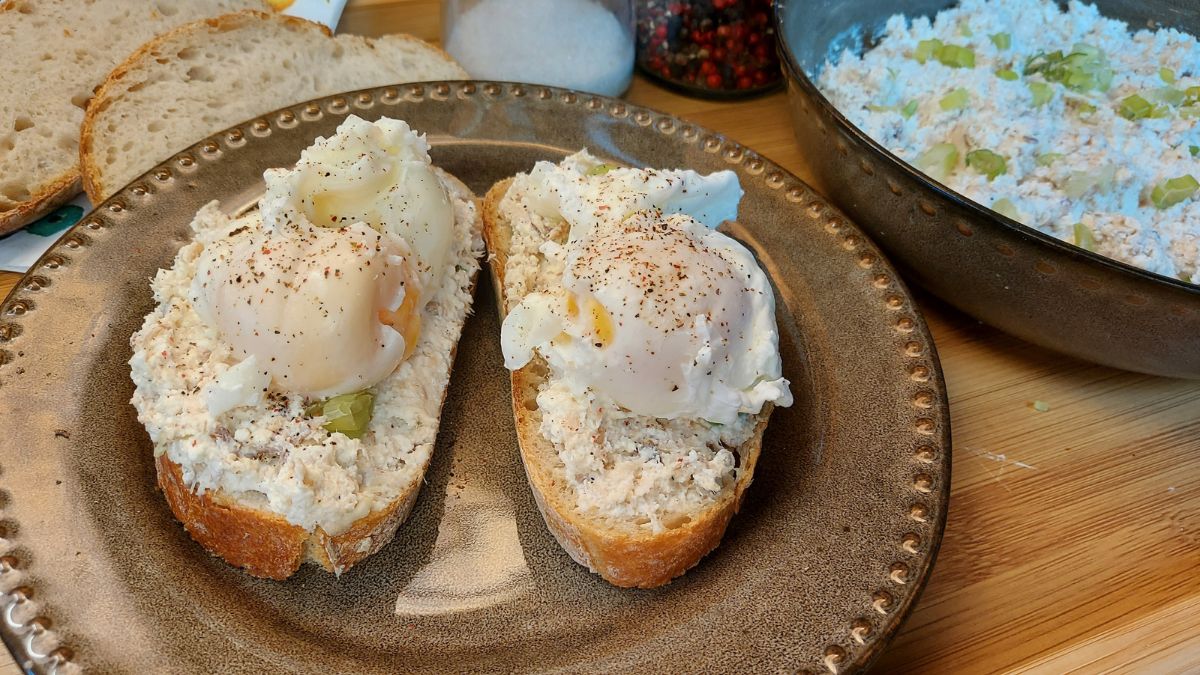
This mackerel fish spread started with a cold, a blocked nose and one very bad night’s sleep.
I woke up hoarse, my sinuses felt completely blocked and I knew I had the weekend to get myself back to feeling at least reasonably functional before going to work on Monday. At the time I was working in a nursery, so turning up on Monday still feeling awful wasn’t exactly the plan. Although, knowing how these things work, my uninvited little intruder had probably already been happily living rent-free in my body for a while before I even realised it was there.
I’m not someone who automatically reaches for paracetamol or ibuprofen when I have a cold. My first instinct is usually to look through my little collection of herbs and then see what I can find in the kitchen.
And that morning, I wanted something with horseradish.
I Needed Something That Would Wake Up My Nose
If you’ve ever eaten a proper spoonful of strong horseradish, you’ll know exactly what I mean. I wanted that sharp hit that makes your eyes water and feels like it travels straight through your nose.
So I opened the fridge to see what else I had.
There was Polish twaróg, some fresh vegetables and chives. In the cupboard I had a tin of mackerel. And somewhere between looking for something to eat and wanting enough horseradish to make my nose notice what was happening, this mackerel fish spread was born.
It turned out to be so good that it stayed long after the cold disappeared.
Why Mackerel Instead of Tuna?
I specifically like mackerel in this spread because it’s a naturally oily fish and a source of the long-chain omega-3 fats EPA and DHA. Fish can also provide protein and nutrients including vitamin B12, vitamin D and selenium.
I also like having another option besides tuna. Mercury levels can vary considerably between different species of fish, so the type of mackerel matters too. Atlantic and Pacific chub mackerel are among the FDA’s lower-mercury choices, while king mackerel is a very different fish and contains much higher levels of mercury.
For this recipe, I use canned mackerel in olive oil or water. It’s worth checking the tin rather than simply grabbing the first mackerel you see.
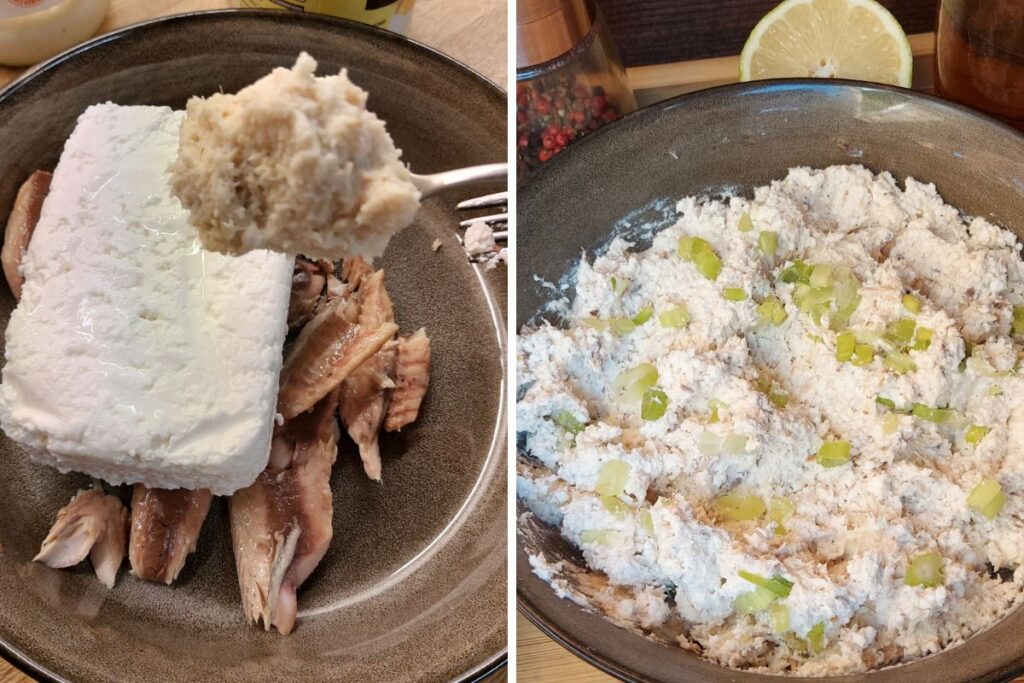
And It Has to Be Polish Twaróg
The other ingredient I wouldn’t casually swap is the Polish twaróg.
It’s a traditional Polish fresh curd cheese with a firm, crumbly texture and a slightly tangy flavour. If you’ve grown up eating it, you’ll know exactly what I mean. It has its own texture and taste, and that’s exactly what I want in this spread.
Once the twaróg is mixed with the soft mackerel, mayonnaise and horseradish, everything comes together into a creamy but still slightly textured spread. Then you get the little crunchy pieces of pepper and either fresh chives with their small green onions or finely chopped red or white onion.
For me, this combination is what makes the spread. I wouldn’t replace the twaróg with ordinary cottage cheese and expect the same result.
And no, twaróg isn’t cottage cheese.
Regular cottage cheese is much wetter, grainier and, for this recipe, often too salty. It changes both the texture and the balance of flavours in the finished spread.
Don’t Be Shy with the Horseradish
I normally use about a tablespoon, but horseradish is one of those ingredients where I always read the label.
Some jars have surprisingly long ingredient lists and, to me, don’t even taste properly of horseradish anymore. I look for a simple one with as few unnecessary additions as possible. I want horseradish that actually tastes like horseradish: sharp, punchy and strong enough that you know you’ve eaten it.
That’s exactly what I was looking for when this recipe first happened.
The Mayonnaise Makes a Difference
One small thing that actually makes quite a difference here is the mayonnaise. I wouldn’t use a very vinegary or tangy mayo for this spread.
Twaróg already has a naturally tangy flavour, so an acidic mayonnaise can push the whole thing too far in that direction and, for me, it just doesn’t taste as good.
I prefer a much milder mayonnaise. Winiary is one I really like and, if you ever come across it in a Polish shop or the Polish section of a supermarket, it’s worth trying. You only need a spoonful, but trust me, it makes a difference.
And yes, there is one very famous mayonnaise brand beginning with an H that I personally wouldn’t use here. I’ll leave it at that.
From a Cold-Day Experiment to a Regular Breakfast
What started as me standing in the kitchen with a blocked nose has become a breakfast spread I’d happily make whether I’m feeling under the weather or perfectly fine.
It’s creamy and slightly crumbly from the twaróg, rich from the mackerel, fresh and crunchy from the vegetables, with that sharp kick of horseradish running through it.
My favourite way to eat it is very simple: piled generously onto warm toast with real butter underneath.
Not margarine. Proper butter.
That accidental cold-day breakfast turned out far too good to save only for cold days.
My family loves it too, so over the years it has simply become one of those spreads that regularly comes back to our breakfast table.
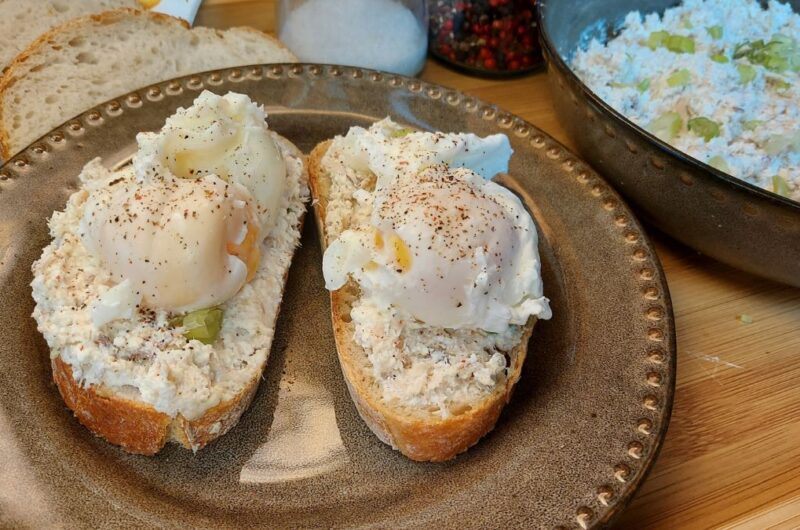
Mackerel Fish Spread with Polish Twaróg and Horseradish
Course: Breakfast, BrunchCuisine: Polish – inspiredDifficulty: Easy4
servings10
minutes180
kcalIngredients
250 g Polish twaróg
120 g / 1 tin of mackerel, preferably in olive oil or water, drained
A few fresh chives with the green onions, finely chopped
or 1 small red or white onion, finely chopped1 bell pepper, any colour, finely diced
1 tbsp horseradish or freshly grated
1 tbsp mild mayonnaise
Salt, black pepper to taste
Optional for serving:
Toasted bread
unsalted butter
poached eggs
Directions
- Place the Polish twaróg in a bowl and break it up with a fork.
- Drain the mackerel and add it to the twaróg. Break the fish into smaller pieces and mix it through the cheese.
- Add the finely chopped chives with the green onions, or use a finely chopped small red or white onion instead.
- Add the finely diced bell pepper.
- Add 1 tablespoon of strong grated horseradish and 1 tablespoon of mild mayonnaise.
- Mix everything together until well combined. I like to keep a little texture rather than making it completely smooth.
- Season with salt and freshly ground black pepper to taste.
- Serve on warm toast
Notes
- Twaróg: Use proper Polish twaróg for this recipe. Regular cottage cheese is much wetter and grainier and can also be too salty, so it won’t give the spread the same texture or flavour.
Horseradish: Use strong prepared grated horseradish, not British-style creamy horseradish sauce. The creamy version is much milder and more of a condiment sauce. Here you want that proper sharp horseradish kick. I also recommend checking the label and choosing one with a simple ingredient list.
Mayonnaise: Choose a mild mayonnaise rather than a very vinegary or tangy one. Twaróg already has a slight tang, and an acidic mayonnaise can make the finished spread too sour. I personally like Winiary mayonnaise for this recipe.
Mackerel: I use canned mackerel in olive oil or water. Drain it before adding it to the twaróg.
Onion: Fresh chives with their little green onions are my favourite, but finely chopped red or white onion works too.
Texture: Don’t blend the spread. Mix it with a fork so you still have some texture from the twaróg, mackerel and vegetables.
Serving: My favourite way to eat it is on warm toast with real butter underneath and poached eggs.
Calories: ~180 kcal per serving (without bread and butter)