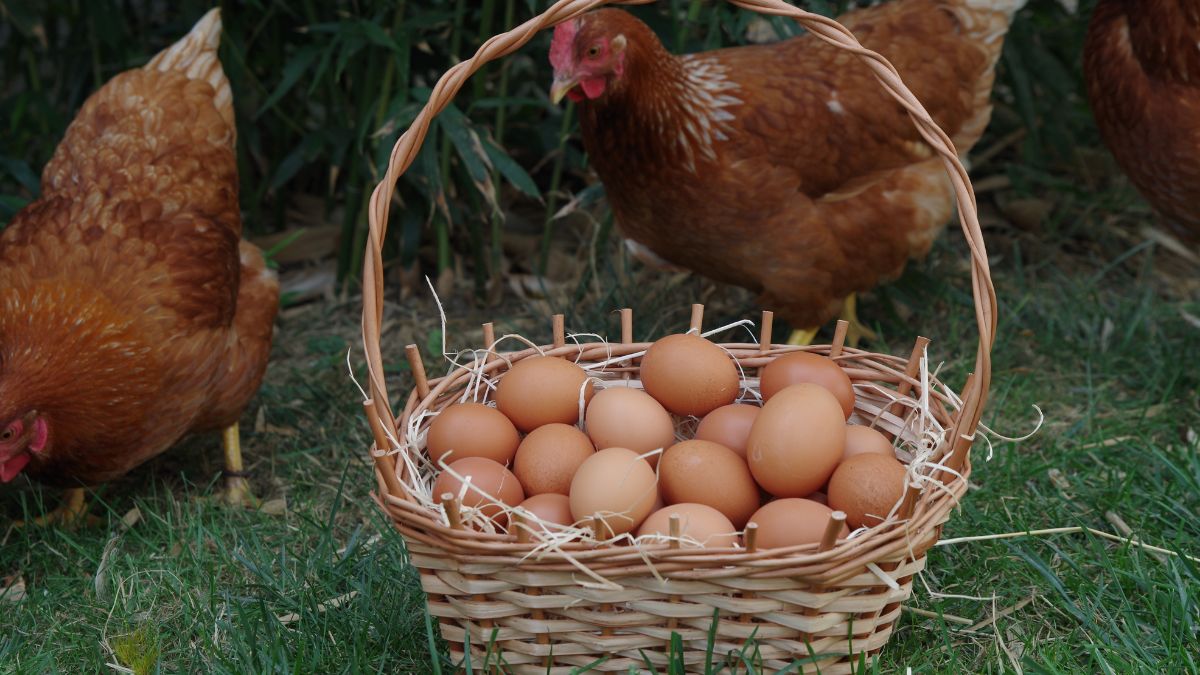
Eggs are one of those foods I always have at home. We eat a lot of them as a family, and when you stop and think about what is packed inside one little egg, it is quite amazing. High-quality protein, choline, vitamins, minerals, fats and carotenoids, all naturally packaged inside a shell. I sometimes think of eggs as one of nature’s little vitamin bombs. They don’t need to be reformulated, fortified or made into something more complicated. They are already a pretty marvellous food just as nature made them.
Because we eat them so regularly, I wanted to buy the best eggs I could reasonably afford for my family. At first, the choice seemed fairly straightforward. You stand in front of the supermarket shelf and see organic, free range and barn eggs, different prices, different brands, beautiful pictures of hens on grass and perhaps a lovely dark-orange yolk on the box. Surely the more expensive or more natural-sounding option must be the better egg?
But what are we actually paying for? Does organic guarantee a better egg? Does free range mean the hen really spends her days outside? What is the difference between free range and pasture raised? What are laying hens fed, and can their diet actually change the nutritional value of their eggs? Does a dark-orange yolk really tell us anything? Then there are the numbers stamped on the shells, hormones, antibiotics, vaccinations, GMO feed and different rules depending on which country you live in. Once I started looking properly, I realised that buying eggs is far more interesting than choosing between a cheap box and an expensive one.
What Do 0, 1, 2 and 3 on Eggs Actually Mean?
Let’s start with something we can all check ourselves. If you buy eggs in the UK or EU, you’ll normally find a code stamped directly onto the shell. The first number identifies the production system: 0 means organic, 1 means free range, 2 means barn and 3 means cage. The letters following it identify the country, such as PL for Poland or UK for the United Kingdom, while the remaining part of the code identifies the registered production premises.
This is useful because there can be a lot of clever wording and attractive imagery on an egg carton, while the code stamped onto the egg is part of a regulated traceability system. A Polish egg beginning with 0-PL, for example, tells us that it was produced organically in Poland. The pretty farm name on the front of a box and the code on the actual egg aren’t the same kind of information, and personally I think it is worth knowing the difference.
Barn eggs, by the way, haven’t disappeared. Code 2 hens aren’t kept in individual cages, but they live indoors. The old conventional battery cages have been banned in the UK and EU, but permitted enriched or colony cage systems can still exist, which is why code 3 hasn’t simply disappeared. Switzerland has taken a different approach to cages, which I’ll come back to later because the differences between countries are surprisingly interesting.
Does Free Range Really Mean the Hen Is Free?
When most of us hear free range, we probably imagine hens walking through grass, scratching around, finding insects and spending plenty of time outdoors. Free range does have a regulated meaning, so it isn’t simply a nice phrase that can be put on any carton. There are requirements around outdoor access, stocking density and the range provided for the birds.
What the label cannot guarantee is that every individual hen actually spends a large part of her day outside. Giving a hen access to the outdoors and that hen choosing to use it are not quite the same thing. Research into free-range systems shows that range use can vary considerably between flocks. Weather matters, but so do vegetation, shade and shelter, the position and number of exits, flock size and how safe the birds feel outside. Some hens simply venture further than others.
That distinction matters to me because free range can create a much more specific picture in our minds than the label actually promises. It tells us that the hen was kept within a production system providing outdoor access under certain conditions. It doesn’t tell us that the particular hen that laid our breakfast spent yesterday afternoon wandering through a green meadow.
There is another little nuance hidden in the rules. During certain compulsory housing periods, such as measures introduced to protect poultry during outbreaks of avian influenza, free-range hens can temporarily be required to remain indoors. There are specific rules governing how their eggs can be marketed during those periods. None of this makes free range meaningless. It simply shows why I think we should understand what a label actually guarantees rather than filling in the rest of the story ourselves.
So What Does Organic Really Guarantee?
Organic is another word that gets used as though it tells us everything about a food. It doesn’t, but it isn’t meaningless marketing either. Properly certified organic production is regulated, and there are genuine standards behind that word covering areas such as feed, housing, outdoor access, veterinary treatment and the management of the birds.
Organic hens must be fed according to organic feed rules, and the deliberate use of GMOs is prohibited within organic production. Hormones and similar substances cannot be used simply to stimulate growth or production. Organic standards also place additional restrictions on conventional veterinary medicines and antibiotics.
But this is where I think we need to be careful with the picture we create in our minds. An organic hen isn’t necessarily a hen that has never been vaccinated, never received medicine and has lived her entire life completely untouched by veterinary treatment. If she becomes ill and genuinely requires treatment, she can and should be treated. Organic farming doesn’t require an animal to suffer just so that nobody can say she received an antibiotic.
Vaccination is compatible with organic farming too. Depending on the country, disease risks and the particular vaccination programme, laying hens may be vaccinated against poultry diseases such as Marek’s disease, infectious bronchitis or Salmonella. Not every poultry vaccine is an injection either. Vaccines can be administered through drinking water or spray as well, which is why asking exactly how many “injections” an organic hen receives doesn’t really give us a meaningful comparison.
Now imagine that an organic hen develops a bacterial infection and a veterinarian decides that she genuinely needs an antibiotic. The hen doesn’t immediately stop producing eggs because she is receiving treatment, but that doesn’t mean those eggs can simply be collected and sold as usual. Veterinary medicines used in food-producing animals can have a withdrawal period, during which eggs must be kept out of the human food chain. Organic production adds further restrictions and generally requires longer withdrawal periods following certain conventional veterinary treatments.
Repeated treatment matters as well. Organic rules place limits around the use of conventional chemically synthesised veterinary medicines, and repeated courses can affect whether an animal or its products retain organic status. Vaccinations, parasite treatments and compulsory disease-control measures are treated separately under the rules. So organic doesn’t mean “never treated”. It means veterinary treatment operates within a stricter framework.
So How Is That Different From a Free-Range or Barn Hen?
This comparison surprised me because a conventional free-range or barn hen isn’t an unregulated bird that farmers can simply give unlimited antibiotics, hormones or injections. Free range and barn mainly describe the housing system. They don’t create completely separate veterinary laws.
Imagine two hens on British farms, one certified organic and the other conventional free range. Both may have been vaccinated during their lives, depending on their farm’s vaccination programme and disease risks. Both can receive veterinary treatment when they become ill, and both are subject to medicine withdrawal periods when these are required. Antibiotics cannot legally be used simply to promote growth or increase production, and their routine use as a substitute for proper husbandry is restricted.
The organic hen, however, lives under an additional set of rules governing when conventional medicines can be used, repeated treatments and how long products must be withheld before they can again be marketed as organic. That is a much more accurate distinction than saying organic hens receive no medicines while conventional hens are constantly medicated.
Hormones raised another question for me. If a conventional British laying hen cannot simply be routinely given hormones to make her produce more eggs, how did we get a hen capable of producing an egg on most days of the year in the first place?
If Hormones Aren’t Making Her Lay So Many Eggs, What Is?
The chicken’s living wild ancestor, the red junglefowl, naturally produces only small seasonal clutches, with estimates often putting annual production at roughly 4 to 15 eggs. That is fascinating when you consider where chickens originally came from, but it isn’t the comparison I find most useful when choosing eggs today. For that, I would rather compare modern commercial layers with traditional domestic breeds that still exist now.
There isn’t one number for a “normal” non-hybrid hen because traditional breeds vary considerably. A traditional Dorking, for example, may produce around 150 eggs a year, while a Plymouth Rock may produce around 200, and some Sussex hens can reach around 200 to 250, depending on the strain, age and conditions. These aren’t completely untouched “natural” chickens either. Humans have selectively bred domestic chickens for generations, but they give us a useful comparison with the highly specialised commercial hybrids used in modern egg production.
Now look at a modern commercial laying hen. Around 300 eggs per year or more is possible for today’s specialised layers. Put a traditional Dorking at roughly 150 beside a modern commercial layer at around 300 and suddenly the difference becomes much easier to understand. We haven’t needed to inject individual hens with hormones to achieve that increase. Much of it has been built into the bird herself through generations of selective breeding.
Commercial laying hens are often hybrids created from carefully selected breeding lines. Over generations, breeders have selected birds that start laying efficiently, produce eggs frequently, remain productive for longer and are less likely to become broody and interrupt the laying cycle. Modern breeding programmes don’t select only for egg numbers, and increasingly consider characteristics such as egg quality, survival, behaviour, skeletal health and longevity. Nevertheless, there is no getting around the fact that humans have dramatically increased the productive capacity of the laying hen.
And there is something particularly important here when we’re comparing supermarket labels: organic doesn’t mean non-hybrid. An organic farm can keep modern high-producing commercial hybrids too. Organic certification tells us about the standards under which that hen is fed, housed and managed. It doesn’t automatically mean that the egg came from an old-fashioned heritage hen laying 150 eggs a year.
For me, that makes the phrase “no added hormones” much more interesting. It may be factually reassuring, but it doesn’t mean humans haven’t dramatically influenced egg production. We have simply achieved much of that change through breeding rather than through a syringe. When one traditional breed may produce around 150 eggs and a specialised modern layer can produce 300 or more, you begin to see just how powerful generations of selection can be.
There is also a welfare question attached to that level of productivity. Producing hundreds of eggs means repeatedly producing yolk, albumen and a calcium-rich shell, all of which place nutritional demands on the hen. Skeletal health and keel-bone damage are recognised welfare concerns in modern laying hens, which is one reason breeding programmes increasingly consider bone strength, robustness, health and longevity alongside continued productivity.
That doesn’t mean every commercial hybrid is unhealthy, nor does it mean every traditional breed is automatically healthier. Selective breeding itself isn’t automatically bad either. But it changes the question I want to ask. Instead of simply wondering whether a hen has been given hormones, I want to know what kind of hen she is, what we have bred her body to produce, how she is fed and whether the farming system properly supports the biological demands we have placed on her.
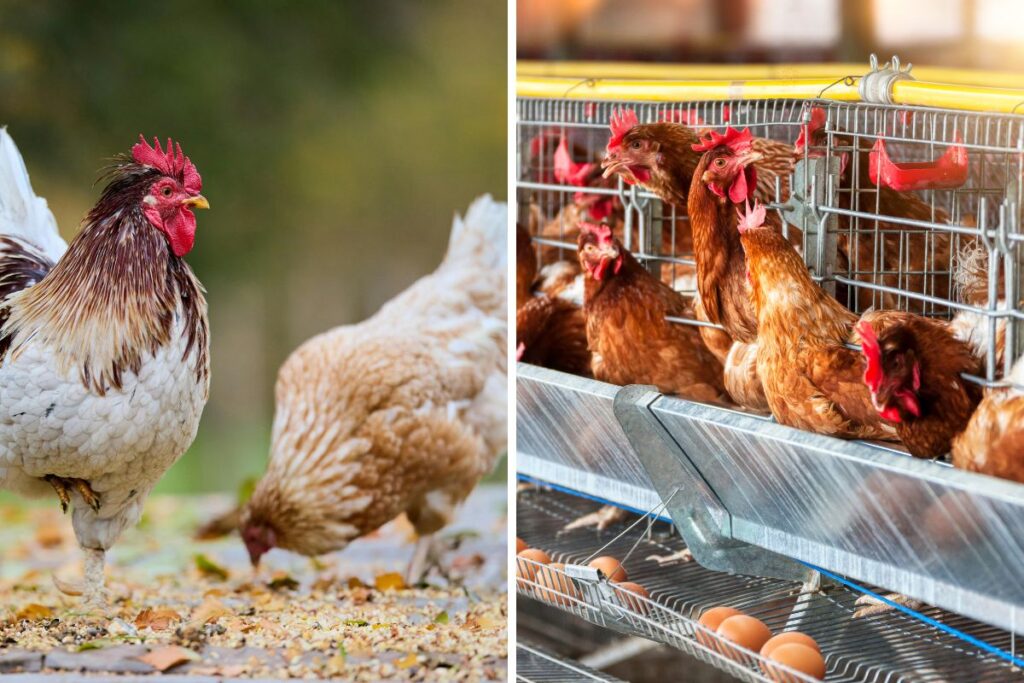
What the Hen Eats Matters
A laying hen cannot produce an egg day after day from thin air. Her diet has to provide energy, protein, essential amino acids, fats, vitamins and minerals. Commercial layer feeds commonly contain cereals such as wheat or maize, protein sources such as soya and mineral ingredients, particularly calcium. Producing an eggshell places a substantial calcium demand on the hen, while vitamin D plays an important role in calcium and phosphorus metabolism.
What I find even more interesting is that the hen’s diet can change what eventually ends up inside the egg. Research has repeatedly shown that the fatty-acid composition of yolks can be influenced through feed. If hens receive appropriate dietary sources of omega-3, for example, more omega-3 can be deposited in their eggs. Carotenoids from the diet can find their way into the yolk too, and levels of some other nutrients can vary according to what the birds eat.
This is where pasture-raised eggs become particularly interesting, but also where I think we have to be careful with big claims. Some studies comparing pasture-raised eggs with commercial eggs have found substantial differences in particular nutrients, including higher omega-3 fatty acids and carotenoids. That doesn’t mean every egg carrying a pasture-raised claim automatically contains three times more of this or twice as much of that. Pasture raised isn’t one universal diet.
One flock may be regularly rotated through fresh, diverse pasture where hens forage for grasses, plants, seeds, insects and worms, while another outdoor environment may provide much less for them to actually eat. Their supplementary feed can also be completely different. Two hens can therefore both have outdoor access while producing eggs with somewhat different nutritional profiles.
Pasture itself isn’t constant either. What is available to a hen in spring can be very different from what she finds in late summer or autumn. Plants mature, insects come and go, and weather changes what is available to forage. Research into pasture systems has found seasonal differences in egg composition, which means even eggs from the same farm don’t necessarily contain exactly the same amounts of every nutrient throughout the year.
Does a Dark Orange Yolk Mean a Better Egg?
I love cracking an egg and finding a beautiful deep golden-orange yolk, but yolk colour on its own isn’t a nutritional score. It is heavily influenced by carotenoid pigments in the hen’s diet. Those pigments can come naturally from foods she eats, but poultry diets can also be formulated specifically to influence the colour consumers see when they crack the egg.
That means a dark-orange yolk isn’t proof that a hen has spent her life wandering through pasture, just as a pale yolk doesn’t automatically mean a poor-quality egg. Colour tells us something about pigments in the diet, but it doesn’t give us a complete picture of the hen’s life or everything contained in her egg. In a genuine pasture system, yolk colour may even vary naturally throughout the year as the foods available to the hens change.
The same applies to shell colour. Brown eggs aren’t automatically healthier than white eggs. Shell colour is largely determined by the breed and genetics of the hen, so white, brown, blue or green shells can look completely different without one colour automatically being more nutritious than another.
What About GMO Feed?
GMO feed was another reason I wanted to understand egg labels properly. Conventional animal feed in Britain can contain authorised genetically modified crops, including imported soya and maize. Eggs from hens fed authorised GM feed aren’t automatically labelled as genetically modified food simply because of what the hen ate.
Organic production is different because the deliberate use of GMOs is prohibited within the organic system. Poland also has a voluntary national labelling system for foods produced without the use of GMO feed, giving consumers another way to identify products meeting those requirements.
So if avoiding GM feed matters to you, simply looking for the word GMO on an ordinary egg carton may not answer your question. You need to understand what production standard sits behind the egg and, when possible, what the farmer actually feeds the hens.
Can Eggs Be Repacked and Sold Under Another Name?
This is something else I became interested in because the name printed prominently on a carton isn’t necessarily the farm where the hen laid the egg. Eggs can legitimately pass through registered packing centres where they are graded, sorted and packed before reaching retailers. There is nothing suspicious about that by itself. It is a normal part of the food supply chain.
What matters is traceability and truthful labelling. Production premises and packing centres are regulated, while the codes stamped onto eggs help identify where they originated. Organic operators also have certification requirements through the relevant parts of the supply chain. This is very different from somebody taking conventional eggs, putting them into an organic box and selling them at an organic premium. Changing a carton obviously doesn’t change the production system the egg came from.
Food fraud and mislabelling can happen, which is precisely why certification, producer codes and traceability matter. It is also why I don’t think a beautiful carton with a picture of a chicken standing on grass should be the only thing influencing our choice. Sometimes it is worth looking beyond the box and finding out who actually produced the egg.
Why I Chose Oakstream Pastures for My Family
When I lived in the UK, looking into all of this eventually led me to Oakstream Pastures. This isn’t sponsored and I wasn’t paid to recommend them. I simply bought their eggs for my own family and had a genuinely good experience with the farm.
What attracted me wasn’t just another label. I could look at their website and social media and actually see their hens, their pasture and how they were being kept. They explained what the hens were fed and talked about moving them regularly onto fresh pasture, allowing areas of land to recover. Instead of simply reading “pasture raised” on a box, I could actually see what that meant on this particular farm.
I especially liked the fact that they talked openly about seasonal variation. The plants, insects and other natural foods available to hens aren’t identical throughout the year, so the eggs don’t necessarily remain identical either. The nutritional composition can vary and yolk colour can change with the seasons. That made sense to me because it reflected what I was finding in the research too.
Their supplementary feed was another reason I chose them. They were open about using organic feed and described it as soy-free and GMO-free, without artificial yolk colourants. I wasn’t left trying to work out what the hens had actually been eating from a few attractive words printed on a carton.
The eggs were considerably more expensive than ordinary supermarket eggs. Including delivery, I remember them working out at around 60p per egg. For me, they were worth it. I don’t smoke, I don’t drink and we rarely eat takeaways, so food is one of the things I’m happy to spend more money on, particularly something as nutrient-dense as eggs that my family eats regularly.
That doesn’t mean I think everyone needs to spend 60p on an egg, and it certainly doesn’t mean expensive automatically equals better. It was simply one of the choices I made about where I wanted our household money to go. I had also bought expensive organic eggs from supermarkets, and eventually I realised that a higher price on its own couldn’t tell me whether one organic egg was nutritionally better than another. If two products meet the same organic standard, the more expensive box isn’t automatically the more nutritious one.
My trust in Oakstream wasn’t based only on their farming information either. Once, one of my deliveries took longer than usual and when the eggs arrived, some were broken and there was mould inside the box. I wasn’t prepared to risk eating them or feeding them to my family, so I contacted the owner and sent photographs showing what had happened.
There was no argument or attempt to dismiss the problem. He politely explained what had happened, sent me a replacement free of charge and gave me a discount on my next order with free delivery. Fresh food being transported through a delivery network can occasionally go wrong. For me, what mattered was how the business responded when it did, and that experience actually made me trust them more.
UK, Poland and Switzerland: The Same Egg Labels?
Having grown up in Poland and later lived in both the UK and Switzerland, I find the differences between these countries particularly interesting. Poland follows the EU egg-production system, so the familiar 0, 1, 2 and 3 codes apply. An egg beginning with 0-PL, for example, tells you that it comes from an organic production system in Poland.
Britain has its own post-Brexit legislation but retains familiar production categories such as organic, free range, barn and cage, together with producer identification for traceability. British consumers will also recognise the British Lion mark. That is an assurance scheme rather than a housing system, and its standards include measures concerning Salmonella vaccination, testing, hygiene and traceability. A Lion egg isn’t automatically organic or free range because the Lion mark is telling us something different.
Switzerland is particularly interesting because conventional battery cages for laying hens have been prohibited there since 1991. Swiss consumers will commonly see systems such as Bodenhaltung, where hens move around inside the poultry house, and Freilandhaltung, which adds outdoor access. Switzerland also has animal-welfare programmes such as BTS and RAUS, while organic standards such as Bio Suisse can impose requirements beyond the statutory minimum.
Swiss organic hens can still be vaccinated, which once again shows why words such as organic, vaccinated and free range aren’t opposites. They simply tell us different things about how the hen is managed.
And What About Eggs in the USA?
The USA is worth mentioning because it demonstrates why we shouldn’t assume that a familiar word means exactly the same thing everywhere. American consumers also encounter terms such as cage-free, free-range, organic and pasture raised, but these exist within a different regulatory and certification system.
Cage-free, for example, doesn’t mean outdoor access. It means the hens aren’t confined to cages and can move within their indoor environment. Free-range standards add an outdoor component, while pasture raised is a term where I would always want to look at the particular certification or producer standard behind the claim rather than relying on those two words alone.
So whenever we see a lovely farm-sounding phrase on a carton, especially in another country, it is worth asking what that phrase actually guarantees there.
Why I Think Eggs Deserve a Place in Our Diet
After all this discussion about farming, feed, genetics and labels, I think it is important to come back to the reason I started looking into eggs in the first place. They pack an impressive amount of nutrition into such a small food. Eggs provide complete, high-quality protein together with nutrients including vitamin B12, selenium, iodine, vitamin A, phosphorus and riboflavin, as well as some vitamin D.
They are also a useful source of choline, a nutrient involved in cell membranes, nervous-system function and the production of acetylcholine. One large egg provides roughly 147 mg of choline. The yolk also contains carotenoids including lutein and zeaxanthin, which is one reason I find the old habit of throwing away the yolk rather strange when we’re talking about eggs as a nutrient-dense whole food.
Of course, yolks contain cholesterol, and for years that one fact seemed to overshadow almost everything else about eggs. Today the relationship between dietary cholesterol and blood cholesterol is understood with much more nuance. For most people, eggs can form part of a healthy balanced diet, while saturated fat and the overall dietary pattern matter considerably too. People with certain conditions affecting cholesterol metabolism may need individual advice, but that is very different from treating egg yolks as something everybody should fear.
If all you want from an egg is protein, the white certainly provides it. But much of what makes an egg nutritionally interesting is in the yolk, including its choline, carotenoids, fats and many of its micronutrients. I don’t see the yolk as the unfortunate part of the egg that nature somehow got wrong. It is one of the reasons I value eggs so much in the first place.
So Which Eggs Should You Buy?
After looking into all of this, I don’t believe there is one magic word on a carton that answers that question for everyone. I would start with the production code and understand what terms such as organic and free range actually mean in the country where I’m buying the eggs. If avoiding GMO feed matters to you, look for a standard that genuinely addresses it. If animal welfare matters to you, look beyond the word free range and find out what the outdoor environment actually looks like.
If you can buy from a transparent local farm, even better. I want to know what the hens are fed, what kind of hens they are, what their outdoor space looks like, whether the pasture is managed and rotated and whether I can actually see how my food is being produced. A farmer openly telling me that the yolks may look different at a particular time of year because the pasture has changed gives me more confidence than somebody simply promising perfectly orange yolks every week.
At the same time, I don’t think good nutrition should become another competition in which people are made to feel guilty because they can’t afford the most expensive eggs in the shop. Buy the best eggs you can reasonably afford. A supermarket egg is still an incredibly useful, nutrient-dense food. Understanding the differences simply allows us to decide where paying more is meaningful to us and where we may simply be paying for branding or marketing.
I started looking into all of this because I wanted the cleanest, most nutritious eggs I could feed my family, and what I found wasn’t as simple as “organic good, everything else bad”. Organic certification gives us meaningful guarantees, and free range tells us something important too. But the breed of hen matters, what she has been selected to produce matters, what she eats matters, how the outdoor space is managed matters, whether she actually uses it matters, and even the season can influence what eventually ends up inside her egg.
Perhaps that is the biggest thing I have taken from all of this. We don’t need another impressive word printed in large letters on a carton. We need enough information to understand what those words actually mean. The next time you’re standing in front of ten different boxes wondering why one costs twice as much as another, turn the box around, look at the code and find out what you’re actually paying for. If you want to go one step further, find out who produced those eggs, what kind of hens they keep, what they feed them and how those hens actually live.
Because an egg may look like a very simple food, but there can be quite a story behind that little shell.
Sources: