There’s something a little melancholic about autumn. The days grow shorter, the evenings arrive earlier, and the warmth of summer slowly gives way to chilly mornings and golden leaves. Markets begin filling with pumpkins in every shape and shade of orange, and before you know it, you’re reaching for a warmer jumper and thinking about what to cook on a cold evening. I love this time of year, although there’s always a little sadness in watching another summer disappear.
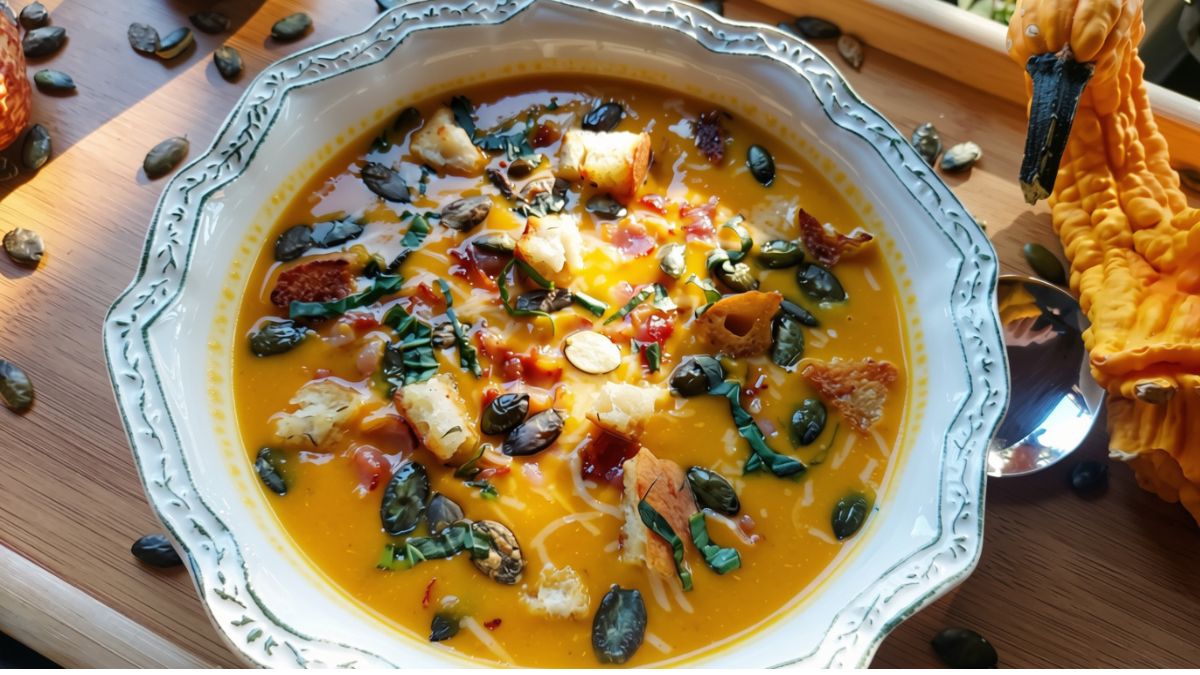
Pumpkin season brings its own kind of comfort. There’s something lovely about returning to ingredients we only enjoy for part of the year, knowing they won’t be around forever. And when the weather turns cold, a bowl of homemade pumpkin soup feels especially welcome. This creamy Hokkaido pumpkin soup is one of my favourite ways to enjoy the season, with its naturally sweet, nutty flavour, a little warmth from chilli and plenty of delicious toppings.
Hokkaido Pumpkin and Its Interesting History
Pumpkin soup doesn’t have one particular country of origin. Different versions have been prepared for generations in places where pumpkins became part of local cooking, and every region seems to have its own way of making it. Some recipes are beautifully simple, while others use cream, warming spices, roasted vegetables or savoury toppings. What makes this version a little different is the type of pumpkin I use.
Hokkaido pumpkin, also known as Red Kuri squash or Uchiki Kuri, is a variety developed in Japan from squash originally introduced from the Americas. Its name is associated with the Japanese island of Hokkaido, while kuri means chestnut in Japanese, a reference to its naturally sweet, slightly nutty flavour. In France, you’ll often find it called potimarron, another name inspired by its chestnut-like taste. It’s quite interesting how one little orange pumpkin has found its way into so many different kitchens.
One of the things I particularly like about Hokkaido is that its skin is edible. Unlike many other pumpkins, it doesn’t need peeling before cooking, as the skin softens beautifully and blends into the soup along with the flesh. That makes preparation easier, reduces waste and gives the finished soup its lovely deep-orange colour. Its naturally creamy texture also makes it particularly good for soups and purées.
What Makes This Pumpkin Soup So Flavourful?
I think a really good pumpkin soup needs a little more than pumpkin and cream. Hokkaido has a lovely natural sweetness, but without something to balance it, the flavour can become rather one-dimensional. That’s why I like combining it with red bell pepper, onion, garlic and potatoes, then building up the flavour with a few carefully chosen ingredients. Nothing complicated, just flavours that work well together.
I always start by sautéing the vegetables in extra virgin olive oil before adding the liquid. This allows the onion and garlic to develop a softer, more savoury flavour, while the pumpkin and red pepper become more aromatic. The red pepper brings its own gentle sweetness, and the potatoes help give the soup body and that smooth, velvety consistency once everything is blended. Sweet paprika adds warmth and a little chilli provides a gentle kick without overpowering the vegetables.
Instead of using only water, I add some bone broth for a deeper, more rounded savoury flavour. A little cream makes the soup silky and comforting, but I don’t use too much because I still want the vegetables to be the main attraction. One ingredient you might not expect is a teaspoon of balsamic vinegar. Its gentle acidity and subtle sweetness complement the natural flavour of Hokkaido pumpkin, adding depth while balancing the richness of the cream and bone broth. It’s a small addition, but it brings the flavours together beautifully.
And if you enjoy Parmesan, I recommend adding just a little freshly grated cheese. You really don’t need much, especially with bacon already bringing plenty of savoury flavour. Parmesan contains naturally occurring glutamates, which contribute umami and give the soup an extra depth without changing its character. It’s a small addition, but sometimes those are the ones that make all the difference.
Sage: My Favourite Herb to Pair with Pumpkin
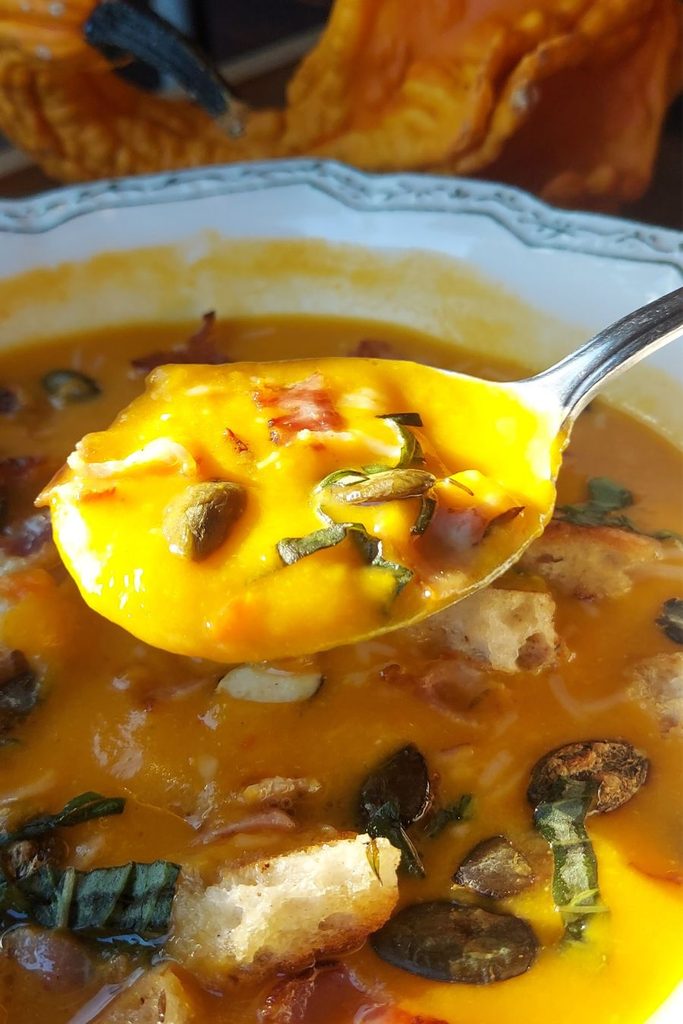
If there’s one herb I particularly recommend trying with pumpkin, it’s sage. I’ve made this soup with sage before, and I love the way its earthy, slightly peppery aroma complements the natural sweetness of Hokkaido. Just a few fresh leaves added while sautéing the vegetables give the soup a more aromatic, savoury character. It’s one of those combinations that feels perfectly suited to autumn.
Sage also has a fascinating history beyond the kitchen. Its botanical name, Salvia officinalis, comes from the Latin word associated with healing, reflecting its long history in traditional herbal medicine. The leaves contain aromatic compounds and polyphenols, including rosmarinic acid, which has been studied for its antioxidant and anti-inflammatory properties. Much of this research involves laboratory studies or concentrated extracts, so we shouldn’t assume that a few leaves in soup will produce the same effects. Still, I love using herbs generously in everyday cooking, both for their flavour and the variety of plant compounds they contribute to our diet.
The Little Things That Make Every Spoonful Better
As much as I enjoy a smooth, creamy soup, I think it becomes even better when there’s something crunchy on top. For this one, I grill a few slices of bacon until crispy, then cut them into small pieces. Their salty, smoky flavour contrasts beautifully with the sweetness of the pumpkin, while homemade croutons add another texture. I make mine from a couple of slices of bread, cut into cubes and fried in extra virgin olive oil with a little salt until golden.
Then come the toasted pumpkin seeds, which are probably my favourite topping of all. I always seem to roast more than I need because I can’t resist eating a few while preparing everything else. Their nutty flavour works beautifully with the soup, and they add a satisfying crunch alongside the bacon and croutons.
More Than Comfort Food: The Nutritional Value of Hokkaido Pumpkin Soup
There’s more to pumpkin soup than its comforting flavour. Hokkaido pumpkin provides dietary fibre and carotenoids, including beta-carotene, the pigment responsible for much of its beautiful orange colour. Our bodies can convert beta-carotene into vitamin A, which supports normal vision, immune function and the maintenance of healthy skin and mucous membranes. Because carotenoids are fat-soluble, preparing the vegetables with extra virgin olive oil and a little cream also helps our bodies absorb them.
The red bell pepper adds another nutritional benefit, particularly vitamin C, although some of it is lost during cooking. Vitamin C is essential for normal collagen formation, helping maintain healthy skin, blood vessels, bones and connective tissues. It also contributes to normal immune function and helps protect cells from oxidative stress. I find it interesting how ingredients chosen primarily for their flavour can also contribute nutrients that work together in the body.
Bone Broth, Collagen and the Importance of Protein
Bone broth is another ingredient I particularly like using in homemade soups. Depending on how it’s prepared, it can contain gelatin and varying amounts of protein and amino acids associated with collagen, including glycine and proline. Collagen is the main structural protein in our connective tissues, and our bodies continuously produce and remodel it using amino acids, vitamin C and other nutrients. However, the collagen-related protein content of homemade bone broth can vary considerably, so it shouldn’t automatically be considered a concentrated collagen supplement.
What I like about combining bone broth with vegetables is that each ingredient contributes something different. The broth brings savoury flavour and potentially some protein, while the vegetables provide fibre, vitamins and a range of plant compounds. The cream and olive oil contribute fat, which helps with the absorption of carotenoids, and the potatoes make the soup more substantial. It’s a good example of how the nutritional value of a meal comes from the combination of ingredients rather than one particular superfood.
Pumpkin Seeds, Zinc and Magnesium
Those toasted pumpkin seeds are much more than a decorative finishing touch. They’re a source of zinc, magnesium, iron, plant protein and unsaturated fats, making them a lovely nutrient-dense addition to the soup. Zinc is particularly important for normal immune function, wound healing, cell division and protein synthesis. It’s a mineral our bodies need regularly, since we don’t have a specialised storage system for it.
Magnesium supports normal muscle and nerve function, while iron contributes to oxygen transport in the blood. Pumpkin seeds also contain plant compounds such as phytosterols, which are being studied for their potential health benefits. Of course, the nutritional contribution depends on how many seeds you actually eat, and a small sprinkle won’t provide large amounts of every nutrient. But I think it’s worth paying attention to these little additions, especially when they make the food taste better at the same time.
Fibre, Potassium and the Benefits of Keeping the Vegetables Whole
Another reason I enjoy homemade vegetable soups is that blending doesn’t remove the fibre from the vegetables. Unlike juicing, where much of the pulp may be discarded, blending keeps the vegetable flesh in the finished dish. The pumpkin, potatoes, onion and red pepper all contribute fibre, which supports normal bowel function and helps make a meal satisfying. They also provide potassium, a mineral involved in normal muscle and nerve function and blood pressure regulation.
Using Hokkaido with its edible skin is especially convenient because there’s very little preparation waste. I simply cook the vegetables until tender and blend everything into a smooth, creamy soup. The result feels rich and comforting without needing large amounts of cream, and the different toppings make it even more satisfying. It’s exactly the kind of meal I enjoy making when I want something nourishing but don’t feel like spending hours in the kitchen.
A Little Taste of Autumn
I think part of the pleasure of seasonal cooking comes from knowing that certain ingredients won’t be available in quite the same way all year. We wait for strawberries in summer, fresh asparagus in spring and pumpkins when autumn arrives. Each season brings something familiar, and perhaps that’s why certain foods can bring back memories or make us feel connected to a particular time of year. A warm bowl of pumpkin soup always seems to belong to those quiet, colder evenings when home feels especially inviting.
For me, good cooking has never been about adding as many ingredients as possible. It’s about understanding what each one brings to the dish, whether that’s sweetness, acidity, richness, aroma or a little crunch. This creamy Hokkaido pumpkin soup brings all those elements together, with earthy sage, crispy bacon, toasted seeds and just enough cream to make it beautifully smooth. It’s simple, comforting food made with ingredients that have a purpose, and that’s exactly how I like to cook.

Creamy Hokkaido Pumpkin Soup with Crispy Bacon and Sage
Course: Main CourseCuisine: EuropeanDifficulty: Easy4
bowls15
minutes35
minutesIngredients
- For the soup
½ Hokkaido pumpkin (Red Kuri squash)
1 small onion
3 medium potatoes
1 red bell pepper
1 small garlic clove
100 ml cream
200 ml bone broth
Approximately 800 ml filtered water
2 tbsp extra virgin olive oil (EVOO), for sautéing
Sweet paprika powder, to taste
A pinch of chilli, to taste
1 tsp balsamic vinegar
Salt, to taste
A few fresh sage leaves (optional, but highly recommended)
A little freshly grated Parmesan (optional, for extra savoury depth)
- For the toppings
5 slices of bacon
2 slices of bread, cut into cubes
Extra virgin olive oil, for frying the croutons
A pinch of salt
A handful of pumpkin seeds, for toasting
Directions
- Prepare the vegetables. Wash the Hokkaido pumpkin, remove the seeds and cut it into cubes, leaving the edible skin on. Peel and dice the potatoes, chop the onion and red bell pepper, and finely chop the garlic.
- Sauté the vegetables. Heat 2 tablespoons of extra virgin olive oil in a large pot over medium heat. Add the onion and sauté until softened, then add the garlic, pumpkin, potatoes and red pepper. Cook for 5–7 minutes, stirring occasionally, to develop their flavour.
- Add the seasoning. Stir in the sweet paprika, a little chilli and a few fresh sage leaves. Cook for another minute, allowing the spices and sage to release their aroma.
- Simmer the soup. Pour in 200 ml of bone broth and approximately 800 ml of filtered water. Season with salt, bring to a gentle boil, then reduce the heat and simmer for 20–25 minutes, or until all the vegetables are tender.
- Blend until creamy. Remove the pot from the heat and blend the soup until completely smooth using a hand blender. Stir in 100 ml of cream, followed by 1 teaspoon of balsamic vinegar. Taste and adjust the seasoning. If the soup is too thick, add a little more hot water until you reach your preferred consistency.
- Prepare the bacon. While the soup is simmering, grill the bacon until golden and crispy. Allow it to cool slightly, then cut it into small pieces.
- Make the croutons. Cut the bread into small cubes. Heat a little extra virgin olive oil in a frying pan and cook the bread until golden and crispy, tossing occasionally. Season lightly with salt.
- Toast the pumpkin seeds. Add the pumpkin seeds to a dry frying pan over medium-low heat. Toast for a few minutes, stirring frequently, until fragrant and lightly golden.
- Serve. Ladle the hot soup into bowls and top with crispy bacon, homemade croutons and toasted pumpkin seeds. Finish with a little fresh sage and, if you like, a small sprinkle of freshly grated Parmesan.
Notes
- Hokkaido pumpkin: There’s no need to peel it. The skin is edible and becomes tender during cooking. Just wash it thoroughly and remove the seeds.
Fresh sage: Highly recommended for its earthy, aromatic flavour. Add a few leaves while sautéing the vegetables to complement the pumpkin’s natural sweetness.
Parmesan: A little freshly grated Parmesan adds extra savoury depth. Use it sparingly so it doesn’t overpower the pumpkin.
Consistency: For a thicker, creamier soup, start with less water and add more after blending until you reach your preferred consistency.
Balsamic vinegar: Don’t skip it! Just one teaspoon helps balance the sweetness of the pumpkin and the richness of the cream.
Toppings: Add the crispy bacon, croutons and toasted pumpkin seeds just before serving to keep them crunchy.
Storage: Refrigerate the soup in an airtight container for up to 3 days. Store the toppings separately and reheat the soup thoroughly before serving.