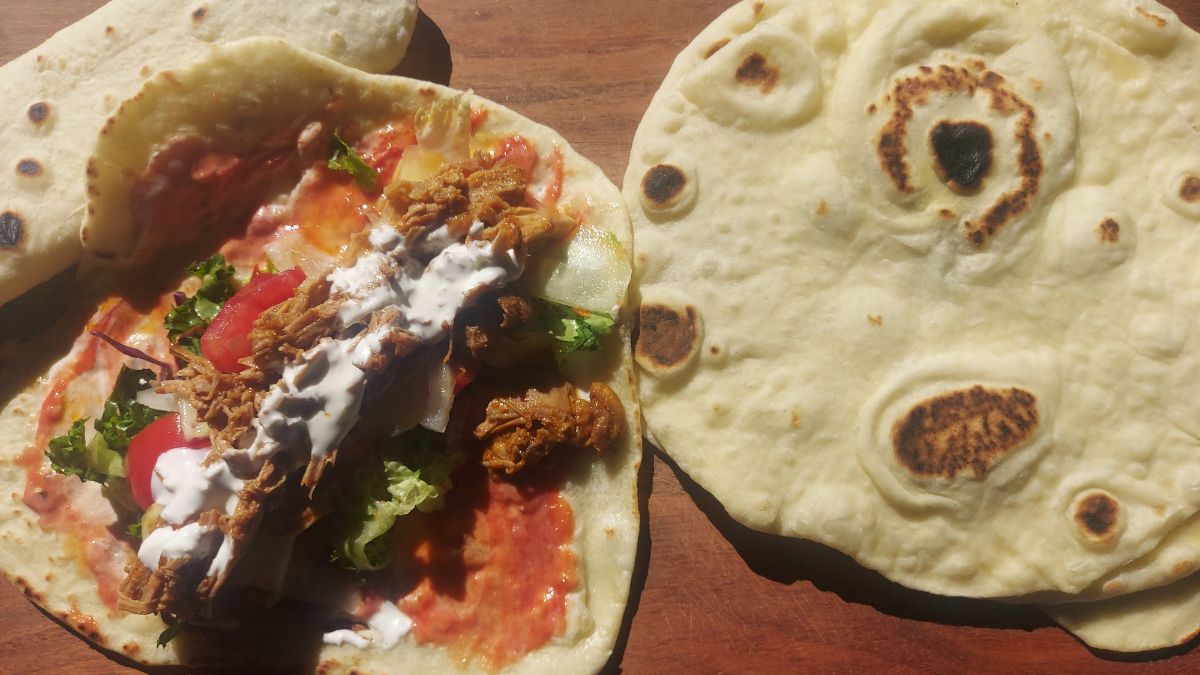
Homemade naan bread first found its way into my kitchen because of kebabs. When I lived in the UK, I absolutely loved the freshly made naan that came with a good kebab, some salad, pieces of lamb or chicken and plenty of garlic sauce.
I had a very particular way of eating it too. I’d tear off a piece of naan, wrap it around some of the meat and salad, then dip the whole thing into the garlic sauce. And repeat.
Eventually, of course, I started making kebabs at home. And if I was going to make the kebab myself, I wanted the naan to go with it.
Then I Realised I Could Just Make More Naan Bread
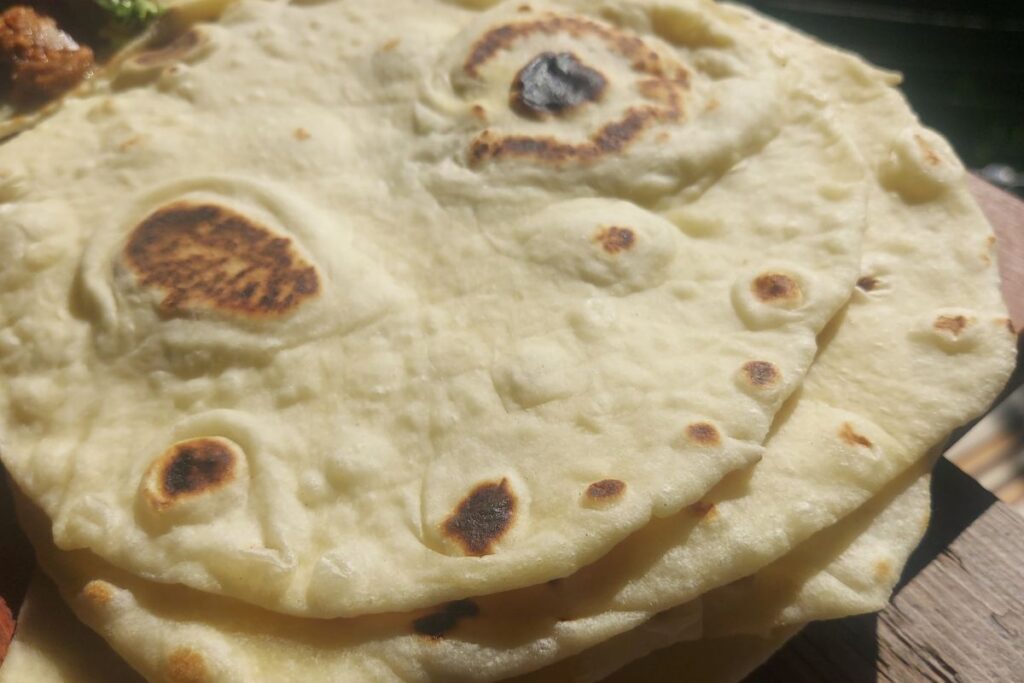
Making homemade naan bread myself also solved one very important problem: sometimes one naan simply isn’t enough.
This became especially useful when I started serving it with curry. If I was making enough curry to last us for two days, I could make a batch of naan at the same time and have enough bread to go with dinner the following day too.
My children didn’t necessarily wait for the curry, though. Fresh naan disappearing from the kitchen on its own was completely normal. Apparently it doesn’t actually need anything with it when you’re passing through the kitchen and there’s a warm one sitting there.
Over time it became one of those recipes I started making with all sorts of meals. We have it with curry, homemade kebabs and hummus, usually tearing pieces off and using them to scoop everything up.
Naan Bread Doesn’t Have to Be Savoury
And then there’s the sweet version.
This probably isn’t the first thing that comes to mind when you think of naan, but it’s one of our favourite ways to eat any that is left over. I spread peanut butter over it, add a little sprinkle of salt and grate dark chocolate over the top. Then I fold the naan in half and slice it into wedges, a little like pizza.
It’s ridiculously simple, but warm naan, peanut butter, salt and dark chocolate together are very, very good.
You could obviously do the same thing with Nutella or another chocolate spread. I just don’t buy them, so peanut butter and dark chocolate is what you’ll find in my kitchen.
One Dough, Lots of Dinners
That’s probably why I’ve continued making homemade naan bread rather than thinking of it as something that belongs with one particular meal. It started with those kebabs I loved eating in the UK, then followed me into homemade kebab nights, curry dinners and bowls of hummus.
Sometimes the kids just ate it plain. Sometimes it became something sweet afterwards.
And I still love eating it the way this whole thing started: tearing off a piece, wrapping it around some meat and salad, dipping it into garlic sauce and going back for another one.
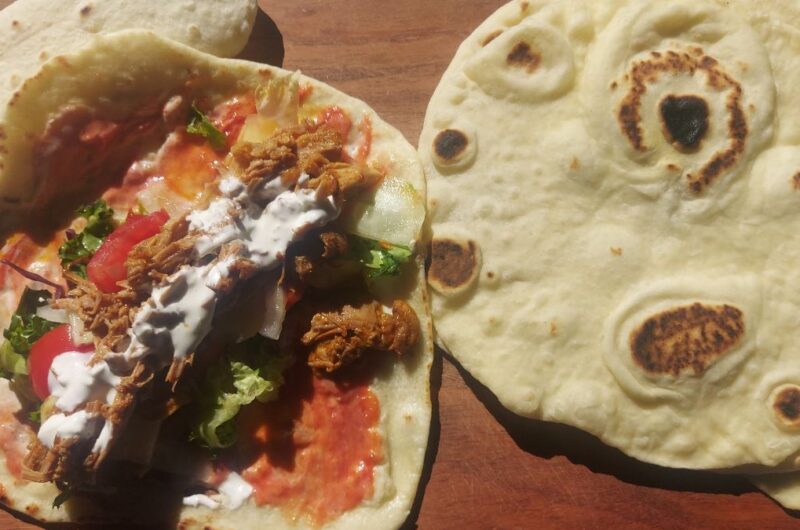
Homemade Naan Bread That Started with a Kebab
Difficulty: Easy8
servings1
hour15
minutes15
minutes210
kcalIngredients
320 g plain flour or bread flour
170 ml warm water, plus up to 30 ml more as needed
1 tbsp sugar
15 g fresh yeast or 1 tsp instant/dry yeast
1 tsp salt
3 tbsp extra virgin olive oil
3 tbsp milk, natural yoghurt or optional — dairy or plant milk
Directions
- Add the warm water, sugar, milk or natural yoghurt and extra virgin olive oil to a bowl or jug. The water should be warm, not hot, as water that is too hot can damage the yeast.
- If using fresh yeast, crumble it directly into the liquid mixture and stir to dissolve. There is no need to leave it to bloom — I use it straight away.
- Add the flour and salt to the bowl of a stand mixer.
- Pour the liquid mixture into the flour and knead using the dough hook. Add the remaining water gradually, only as needed, until you have a soft, slightly tacky dough. You may not need the full additional 30 ml.
- Cover the bowl and leave the dough to rise in a warm place for approximately 1 hour, or until noticeably increased in size.
- Divide the risen dough into portions. I usually make around 8 naan, but the size depends on the pan I’m using and how large or thick I want them that day.
- Roll each portion into a thin round or oval shape.
- Heat a dry frying pan until hot. Cook each naan for approximately 1 minute on each side, watching it closely. The pan gets progressively hotter, so later naan may cook considerably faster.
- If the pan becomes too hot, temporarily take it off the heat and continue cooking using the residual heat for a short while. Return it to the heat when needed and continue with the remaining naan.
Notes
- Flour doesn’t always absorb the same amount of liquid. The type of flour, its age, how it has been stored and even seasonal changes can affect how much water it absorbs. Start with 170 ml and add more gradually, judging the dough rather than automatically adding all of it. The dough should be soft and slightly tacky, not stiff or dry.
You can use plain flour or bread flour. I use whichever I have at home, but they may absorb slightly different amounts of liquid.
The milk or natural yoghurt is flexible too. You can use a dairy or plant-based version. If you leave it out completely, you may need to compensate with a little additional water.
When using fresh yeast, don’t use hot water. The liquid should only be comfortably warm. I dissolve the fresh yeast directly in the water, sugar, milk/yoghurt and olive oil mixture and use it immediately rather than waiting for it to bloom.
If using instant or dry yeast, check the packet. Different products are designed to be used differently, and some can go directly into the flour.
Don’t rely completely on the suggested cooking time. The temperature of the pan changes throughout the batch. The first naan may need around a minute per side, while later ones can colour much faster. If necessary, take the pan off the heat briefly to bring the temperature back down.
I usually make around 8 naan, but there is no strict size. Make them smaller, larger, thinner or thicker depending on your pan and what you’re serving them with.