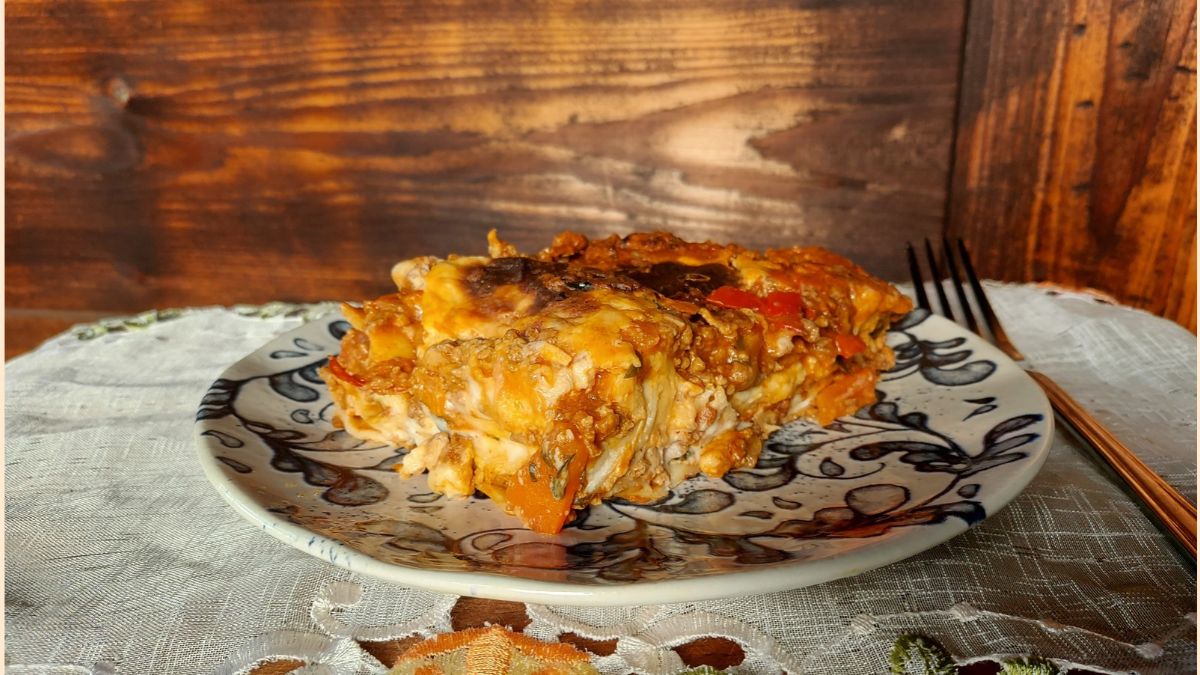
Who Doesn’t Love Lasagne?
Seriously, who doesn’t love lasagne? I don’t think I’ve ever met anyone who doesn’t. But I have certainly met a few lasagnes I didn’t love.
I’ve had lasagne with tomato sauce so acidic it practically made my eyes water. I’ve encountered meat fillings with mysterious hard bits that made me wonder what exactly had gone through the mincer. Hooves, perhaps? And then there are those stubborn layers of pasta that somehow remain hard, even though everything around them has been cooked.
And the greasy ones? Oh, please. There’s nothing particularly appetising about cutting into a slice and watching a little pool of orange oil spread across your plate.
I’ve also been served lasagne in Italian restaurants where an individual portion arrives in a small baking dish, apparently reheated beneath another generous helping of tomato sauce and grated cheese. The pasta is practically swimming. At that point, I’m not entirely sure whether I’ve ordered lasagne or a rather expensive bowl of lasagne soup.
Now, I’m certainly not here to tell Italians how to cook their own food. But after years of making and eating lasagne, I’ve developed a few opinions about what makes a good one.
And apparently, I’m not the only person who takes lasagne rather seriously.
The Great Lasagne Disappointments
I recently came across an Instagram account dedicated to reviewing lasagne. Yes, an entire account devoted to one dish. Honestly, I admire that level of commitment.
One reviewer described returning to a restaurant after a disappointing first visit, hoping the original experience had simply been an unfortunate mistake. But when the second lasagne arrived, the promised cheese topping was missing again. The menu had specifically mentioned mozzarella and cheese, so you can imagine the disappointment.
Someone in the comments suggested that whoever made lasagne without cheese deserved a life sentence.
A little dramatic? Perhaps. But I understood the frustration. Imagine looking forward to a lovely, golden, bubbling lasagne, only to discover that the cheese has apparently taken the evening off.
Of course, cheese isn’t the only thing that can go wrong. Too much sauce, not enough sauce, bland meat, dry pasta or layers that collapse into an unrecognisable heap can all turn a promising dinner into a disappointment.
And while we’re discussing culinary crimes, I’ve seen some rather creative lasagne recipes online. One-pan versions, unusual vegetable combinations, shortcuts that barely involve layering anything at all. Some might be delicious, but at what point does a lasagne stop being lasagne and become a completely different dish?
Then again, I probably shouldn’t be too quick to judge.
My own recipe isn’t exactly traditional either.
My Lasagne Has a British Accent
I spent twenty years living in the UK, and somewhere along the way, my idea of a really good lasagne developed a distinctly British influence.
The biggest difference is my cheese sauce.
Traditional lasagne alla Bolognese is generally made with a slowly cooked meat ragù, pasta sheets, béchamel and Parmigiano Reggiano. In Bologna, green spinach pasta is particularly traditional. The béchamel brings creaminess without overpowering the other ingredients, allowing the flavour of the ragù to remain central.
It’s a beautiful combination, and I understand why it has stood the test of time.
But personally, I’ve always found a plain béchamel a little too delicate for my taste. I like a sauce with more character, something that brings a proper cheesy flavour to every layer.
So I use mature cheddar.
Yes, cheddar. In lasagne.
I can almost hear an Italian grandmother putting down her wooden spoon.
My sauce begins with olive oil or ghee and flour, followed by milk and a generous amount of mature cheddar. It’s creamy, comforting and has enough flavour to stand up to the meat and tomato sauce without disappearing into the background.
I’m not claiming this is how lasagne should be made in Italy. It’s simply how I like mine, and after all those years in Britain, I suppose cheddar was bound to find its way into the recipe eventually.
That’s the thing about food. Recipes travel, people move, tastes change, and dishes gradually become part of a family’s own cooking traditions. My homemade lasagne recipe is a good example of that. It has Italian roots, British influences and quite a few years of family dinners behind it.
The Meat Sauce Makes All the Difference
For me, a good lasagne begins with a properly cooked meat sauce.
Traditional ragù alla Bolognese usually starts with a soffritto of onion, carrot and celery, followed by meat, wine and a relatively modest amount of tomato. It’s cooked slowly, allowing the flavours to develop into something rich and savoury.
My version is different. I use onions, garlic, carrots, peppers, tomatoes, passata and herbs. I like a generous, well-seasoned sauce with enough moisture to cook the pasta properly, but not so much that the finished dish loses its structure.
One thing I’m particularly careful about is the balance of acidity. I’ve tasted lasagne where the tomato sauce was so sharp that it seemed to overpower everything else. Tomatoes naturally have acidity, but a good sauce should have depth and balance, not leave you pulling faces after every mouthful.
Then there’s the meat itself.
I usually choose minced beef with around 5% fat, although sometimes I make a half-beef, half-pork mixture. Both work beautifully, but I prefer keeping the fat content relatively low, especially because my cheese sauce is already rich.
I know that fat contributes flavour, and traditional ragù often uses fattier cuts of meat. But I don’t want my lasagne leaving a greasy puddle behind on the plate.
And after encountering those mysterious chewy bits in other people’s meat sauces, I’m quite happy choosing my own mince. To this day, I have no idea what some of those pieces were, and I think I’d rather keep it that way.
Homemade Pasta, Proper Layers and Plenty of Cheese
When I have the time, I make my own lasagne sheets using flour, eggs, olive oil and salt. I knead the dough, leave it to rest and roll it through my pasta machine until the sheets are thin and smooth.
I enjoy making pasta from scratch, but I don’t believe it’s essential for a delicious lasagne. I’ve used ready-made sheets plenty of times, particularly when cooking for larger groups.
When I worked in a nursery kitchen, lasagne was one of the dishes the children loved, and it was popular with the staff too. I certainly wasn’t making fresh pasta sheets for every tray, yet the lasagne was always well received.
What matters is that the pasta cooks properly. There’s nothing worse than finding a hard, undercooked sheet hiding between otherwise lovely layers of sauce and cheese.
I also believe lasagne should have recognisable layers. Pasta, meat sauce and cheese sauce, with mozzarella and Parmigiano bringing everything together. I want to see those layers when I cut into it, rather than a solid brick or a slippery mixture of ingredients that has lost all sense of direction.
The consistency of the sauces makes a difference here. My cheese sauce is fairly loose before baking because the cheddar adds body and the pasta absorbs moisture as it cooks. The meat sauce also needs enough liquid to keep everything tender without drowning the dish.
It’s a balance I’ve developed through years of making lasagne, and it’s one of the reasons I prefer preparing each component myself.
The Fifteen Minutes Nobody Wants to Wait
There’s one final thing that can make the difference between a beautiful slice of lasagne and a complete mess.
Resting time.
I know how tempting it is to cut into the dish the moment it comes out of the oven. The cheese is bubbling, the top is golden, the kitchen smells wonderful, and suddenly everyone in the house is absolutely starving.
But if you serve lasagne immediately, the sauces are still extremely hot and fluid. You cut into those carefully arranged layers, lift out the first portion, and watch the whole thing collapse onto the plate.
After all that work, it can look as though someone dropped it down the stairs.
Give it about fifteen minutes to rest. The sauces settle, the layers hold together better, and you can serve a proper slice rather than something that needs to be rescued with a spoon.
It will still be warm, I promise. And after spending all that time making the meat sauce, preparing the cheese sauce and assembling the dish, another fifteen minutes really isn’t much to ask.
The Lasagne My Family Loves
My idea of a perfect lasagne is quite simple. I want tender pasta, a rich and balanced meat sauce, creamy cheese between the layers and a golden top. It should be moist without being watery, satisfying without being greasy, and full of flavour without any one ingredient taking over.
That’s what I aim for every time I make this homemade lasagne recipe.
Is it an authentic lasagne alla Bolognese? No, and I wouldn’t pretend otherwise. But it’s the version I’ve developed over years of cooking, influenced by the food I grew up with, the two decades I spent in Britain and the people I’ve cooked for along the way.
It’s been enjoyed by my family, friends, colleagues and plenty of nursery children over the years. And while I can’t promise that an Italian grandmother would approve of the cheddar, I can say that the people around my table have never complained about it.
So if you like a generous, cheesy lasagne with a proper meat sauce and tender layers of pasta, this is the one I make.
Just one request: please let it rest before you cut into it.
And whatever you do, don’t forget the cheese.
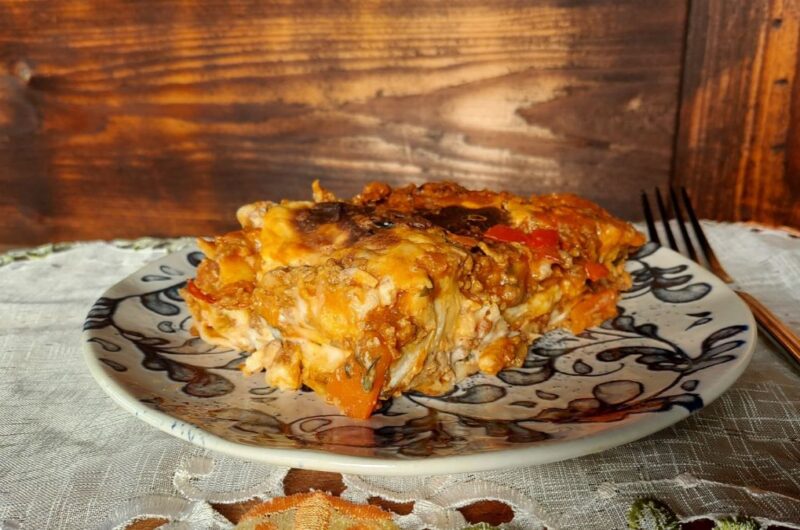
Homemade Lasagne Bolognese – My Family’s Favourite Comfort Food
Course: Main CourseCuisine: Italian-InspiredDifficulty: Intermediate8
servings45
minutes1
hour30
minutes750
kcalIngredients
- Homemade Pasta Sheets
2½ cups plain flour
4 eggs
1 tbsp olive oil
1 tsp salt
- Meat Sauce
750 g lean minced meat (5% fat)
2 onions
4 garlic cloves
2 carrots
1 Bell pepper ( any colour)
1 tin chopped tomatoes (400 g)
400 ml tomato passata
400 ml boiling water
3 tbsp Olive oil
1 tsp of each Dried oregano and basil
1 tsp Sweet paprika
Salt and freshly ground black pepper to taste
- Creamy Cheese Sauce
4 tbsp olive oil or ghee
2 tbsp plain flour
400–500 ml milk
150 g grated mature cheddar
Salt and black pepper
A little double cream (optional)
- For Layering
Mozzarella
Freshly grated Parmigiano Reggiano
Directions
- Prepare the Homemade Pasta
- Place the flour on a clean work surface and make a well in the centre. Add the eggs, olive oil and salt.
- Gradually bring the flour into the eggs using a fork, then knead the dough for approximately 8–10 minutes until smooth and elastic.
- Wrap the dough or cover it with a bowl and leave to rest at room temperature for 20–30 minutes.
- Divide the dough into smaller portions and roll each one through a pasta machine, starting with the widest setting and gradually reducing the thickness. Cut the sheets to fit your baking dish and keep them covered until needed.
- Make the Meat Sauce
- Heat a little olive oil in a large pan over medium heat. Add the finely chopped onions and cook until softened, then stir in the garlic.
- Add the minced beef and cook until browned, breaking it up with a wooden spoon. If using a mixture of beef and pork, brown both together.
- Add the chopped carrots and peppers, stirring for a few minutes until they begin to soften.
- Pour in the chopped tomatoes, passata and boiling water. Add the oregano, basil, sweet paprika, salt and black pepper.
- Stir well, bring to a gentle simmer and cook uncovered for approximately 30–45 minutes, stirring occasionally. The sauce should become rich and flavourful while retaining enough moisture for the pasta. Taste and adjust the seasoning.
- Make the Cheddar Cheese Sauce
- In a separate saucepan, heat the olive oil or ghee over medium-low heat. Add the flour and stir continuously for 1–2 minutes, until the flour loses its raw appearance and begins to change colour slightly.
- Gradually pour in the milk, whisking constantly to prevent lumps. Continue stirring until the sauce is smooth and begins to thicken.
- Reduce the heat and stir in the grated mature cheddar until melted. Season with salt and freshly ground black pepper. The sauce should remain creamy and fairly loose, as it will thicken further during baking.
- Assemble the Lasagne
- Preheat the oven to 180°C fan (200°C conventional).
- Spread a thin layer of meat sauce over the bottom of a large baking dish.
- Cover with a layer of pasta sheets, followed by meat sauce, cheddar cheese sauce, a little mozzarella and freshly grated Parmigiano Reggiano.
- Repeat the layers until all the ingredients are used, finishing with pasta, cheese sauce, mozzarella and Parmigiano on top.
- Bake and Rest
- Cover loosely with foil and bake for approximately 25–30 minutes. Remove the foil and continue baking for another 15–20 minutes, until the pasta is tender, the filling is bubbling and the cheese is golden. If using dried pasta sheets, follow the packet instructions and adjust the baking time if necessary.
- Remove the lasagne from the oven and leave it to rest for at least 15 minutes before slicing. This allows the layers to settle and helps each portion hold its shape.
- Serve
- Cut into generous portions and serve warm, with a fresh green salad or your favourite vegetables.
Notes
- Meat: I prefer lean minced beef with around 5% fat to prevent the lasagne from becoming too greasy. Sometimes I use a 50/50 mixture of minced beef and pork for a slightly different flavour.
Homemade pasta: Roll the pasta sheets thinly and evenly so they cook properly. If using shop-bought dried lasagne sheets, check the packet instructions and make sure your meat sauce contains enough moisture.
Meat sauce: Allow the sauce to simmer gently so the flavours develop. It should be rich and well seasoned but still moist enough to help cook the pasta during baking.
Cheddar cheese sauce: Don’t make the sauce too thick. It should be creamy and fairly loose before assembling the lasagne, as the pasta will absorb some of the moisture during baking.
Cheese: Mature cheddar gives the sauce a stronger flavour than traditional béchamel. Use mozzarella and freshly grated Parmigiano Reggiano between the layers and on top.
Baking time: Cooking times may vary depending on the depth of your baking dish and the thickness of your pasta sheets. Check that the pasta is tender, the filling is bubbling and the top is golden before removing it from the oven.
Resting: Leave the lasagne to rest for at least 15 minutes after baking. This helps the layers settle and makes it much easier to cut into neat portions.
Storage: Allow leftovers to cool, refrigerate within 2 hours and store in an airtight container for up to 2 days. Reheat thoroughly until piping hot throughout.
Freezing: Lasagne freezes well in individual portions. Allow it to cool completely before wrapping and freezing for up to 3 months. Defrost overnight in the fridge before reheating thoroughly.